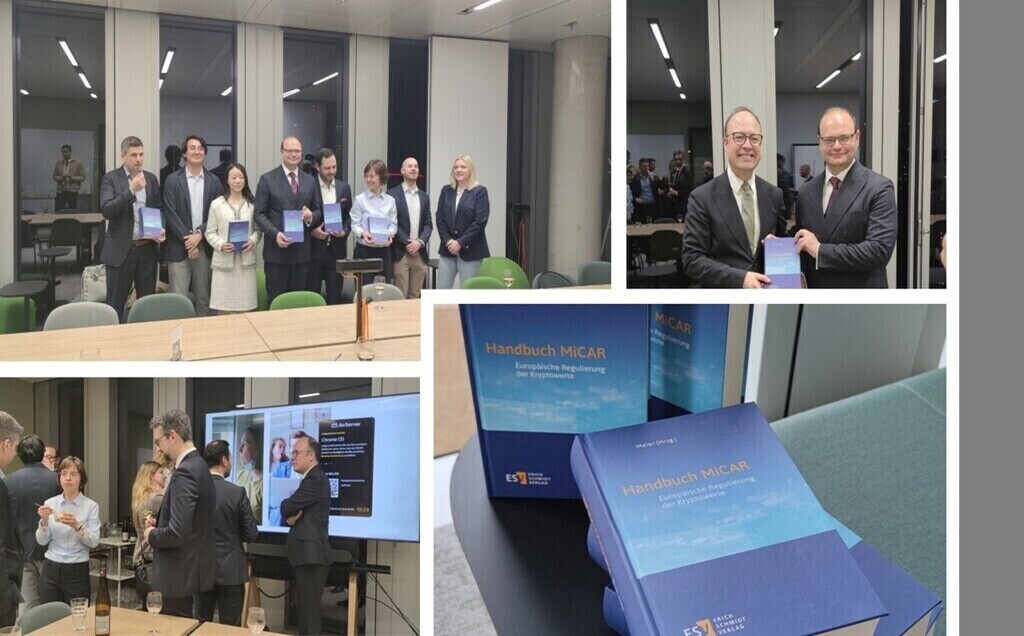
Initial meeting

Aug 05, 2019

Crypto Custody Service – New Financial Service Providers as the Future Centers of Power of the Crypto Market?

On 29th of July the German federal government resolved its draft proposal for the transposition of the provisions of the 5. European AML Directive into national law. It can be expected that this draft in its current form will be passed into law by the end of 2019. As of 1st of January 2020, crypto assets will be included in the catalogue of financial instruments in the German Banking Act (KWG) and crypto custody services will be considered as a financial service that is subject to authorization from BaFin. While the inclusion of crypto assets in the catalogue of financial instruments in the German Banking Act will not significantly affect the current regulation of blockchain units in Germany, the proposed regulation and creation of crypto custody services will lead to a situation in which the German crypto market cannot function without BaFin supervised services of this kind.

CRYPTO ASSETS EXPAND THE CATALOGUE OF FINANCIAL INSTRUMENTS IN THE GERMAN BANKING ACT (KWG)

The criticized administrative practice of BaFin according to which Bitcoin and comparable cryptocurrencies are units of account and therefore financial instruments according to the German Banking Act (KWG) will be accompanied by the explicit qualification of crypto assets as financial instruments within the German Banking Act (KWG) itself. The German legislator does not want to leave any doubt that the German crypto market is regulated and that crypto service providers need a BaFin approval prior to the start of their business operations. After this law will be passed it will be irrelevant for the qualification as a financial instrument if a blockchain unit is meant to be an alternative means of payment such as Bitcoin or if it is meant to be an investment vehicle. The decisive factor will be if the coin in question will fit the definition. More precisely if it is the digital representation of a value that is not issued by a public institution and that is useable as a means of exchange because of a private agreement or actual practice and that can be transferred, stored, and traded electronically.

CRYPTO CUSTODY SERVICES AS THE NEW CENTER OF POWER

As of the 1st of January 2020, the storage, management and safeguarding of customer crypto assets or private cryptographic keys that are meant to store or transfer crypto assets will be a financial service that requires prior BaFin authorization. The decisive difference between the draft proposal of the German Ministry of Finance from May 2019 and this (now resolved) draft by the German federal government is the newly introduced section 32 subsection 1 g into the German Banking Act (KWG). According to this new provision, BaFin can only license companies as crypto custody services if these companies do not offer any other banking or financial services that would also require BaFin authorization. That means that companies that currently offer their customers the permanent or temporal storage of crypto assets in addition to their BaFin licensed other business model will not be able to continue doing so without outsourcing the crypto custody service to a licensed crypto custody service provider. An application from these companies for obtaining a BaFin license as a crypto custody service cannot be successful. This will especially affect centralized crypto exchanges but also financial portfolio managers and crypto payment services that have a credit balance function for their customers. Especially centralized crypto exchanges depend on the temporal storage of client crypto assets to settle the customer transactions. The German crypto market will then be regulated in a similar manner as currently the securities market, where customer securities must be stored by central securities depositories such as Clearstream AG.

WHAT IS THE REASON FOR THE EXCLUSIVE LICENSING OF CRYPTO CUSTODY SERVICES?

By the decision to design crypto custody services as an exclusive financial service (meaning that a company can only offer crypto custody services and no other financial or banking service that requires a BaFin license), the German legislator wants to centralize the crypto market. The exchange of cryptocurrencies or other crypto assets via service providers shall in the future require the commission of a BaFin licensed crypto custody service. The legislative decision to centralize the German crypto market is most probably influenced by the latest FATF recommendations. The FATF recommended to the global legislators to regulate crypto service providers in general in order to combat money laundering and terror financing. To achieve this, the FATF suggested that every crypto service provider that is involved in a crypto transaction should be obliged to collect information about the recipient and the sender of that transaction and provide this information to the counterpart of the transaction, specifically the other crypto service provider, as well as to the competent supervision authority. These obligations and corresponding systems can be implemented much easier in a centralized system than in a decentralized one. The basic idea of decentralization as the fundamental technical innovation of blockchain technology will however be put in tight shackles with the centralization of the crypto market.

Attorney Lutz Auffenberg, LL.M. (London)

I.  https://fin-law.de

E. info@fin-law.de

subscribe to Newsletter

    Contact

    info@fin-law.de

    Jul 29, 2019

    Crypto Assets vs. Units of Account – What would be the Impacts of the Introduction of Crypto Assets as Financial Instruments?

    The German Ministry of Finance caused a stir to the German cypto community in May 2019 with its first draft for the transposition of the provisions of the 5. European AML Directive into national law. The ministries draft would not only implement the mandatory regulations from the directive to the German Anti Money Laundering Act but go beyond and define crypto assets as financial instruments according to the German Banking Act (KWG). While the 5. European AML Directive requires the EU members to create a definition for virtual currencies that includes not only crypto currencies but also other forms of alternative money such as computer game currencies, the ministries draft explicitly targets crypto assets and therefore transferrable blockchain units. It is questionable if this first draft of the German legislator is sufficient to implement the European requirements. If, however the elevation of crypto assets to financial instruments in the sense of the German Banking Act becomes legislative reality, the big question would be what regulatory effects this would have on blockchain related Fintech companies?

    LANDMARK RULING FROM THE COURT OF APPEAL IN BERLIN REGARDING BITCOIN AS UNITS OF ACCOUNT

    Already since 2011 BaFin qualified Bitcoin and comparable cryptocurrencies in an established administrative practice as units of account and therefore as financial instruments according to the German Banking Act. When the Court of Appeal in Berlin in a criminal case in September of 2018 ruled (Urt. v. 25.09.2018, Az 161 Ss 28/18) that Bitcoins cannot qualify as units of account as defined in the German Banking Act BaFin was quick to announce that it would stick to its established administrative practice as long as the competent administrative courts would not declare this practice unlawful or until the German legislator would regulate the subject otherwise. It can therefore be assumed that the aforementioned ruling motivated the German legislator to regulate the subject by specifically defining crypto assets as financial instruments according to the German Banking Act.

    CRYPTO ASSETS AS FINANCIAL INSTRUMENTS WOULD BE A GERMAN SOLO EFFORT

    The fact that the definition of crypto assets as financial instruments would be a solo effort within the European Union by Germany is problematic and has faced a lot of criticism during the course of the discussion that ensued after the first draft of the ministry was released. A base for such a legislative action cannot be found in the European directives or provisions regarding the banking or financial service regulations. As stated, the 5. European AML Directive requires the member states merely to define virtual currencies. That those emerge into a full-fledged financial instrument with all the regulatory implications that come along with this kind of qualification is not required by the directive. Interestingly enough, the regulation of units of account likewise does not have any legal basis within the European directives. The German legislator incorporated these into the catalogue of regulated financial instruments because he wanted to regulate the trading of units of account in the same way in which the trading of foreign currencies is regulated. Because the trading of cryptocurrencies is an international phenomenon, it should be undesirable to have different regulations for crypto assets within the European Union’s member states. The German legislator could instead campaign for the incorporation of marketable cryptocurrencies in the catalogue of the second Markets in Financial Instruments Directive (MiFID II). This would ensure a homogeneous regulation of cryptocurrencies throughout the European Union.

    WHAT EFFECTS WOULD THE QUALIFICATION OF CRYPTO ASSETS AS FINANCIAL INSTRUMENTS IN GERMANY HAVE?

    The effects of the proposed draft on blockchain affiliated Fintech companies in Germany would be very limited because neither under the current regulatory situation which qualifies Bitcoin and Bitcoin-like cryptocurrencies as units of account nor under the proposed regulation those cryptocurrencies would qualify as financial instruments as defined by MiFID II. While the regulations of the German Banking Act would still be applicable, the other capital markets regulations that result from e.g. the German Securities Trading Act, the European Market Abuse Directive or the German Securities Prospectus Act would only be applicable if the crypto asset in question fulfilled the additional prerequisites to qualify as an financial instrument according to the law in question. The EU Passporting, that is the usage of a German BaFin license in other EU member states, would still be impossible because the regulation would still not be harmonized within the EU. Positive from a solely German point of view would be that the German legislator reacts to the legitimate criticism from the Court of Appeal in Berlin regarding the current regulatory situation in Germany and that the regulatory situation would get the necessary legal clarification.

    Attorney Lutz Auffenberg, LL.M. (London)

    I.  https://fin-law.de

    E. info@fin-law.de

    subscribe to Newsletter

      Contact

      info@fin-law.de

      Jul 16, 2019

      Seminar on Anti-Money-Laundering Regulation and Virtual Currencies

      On 30th September 2019 Lutz Auffenberg, LL.M. will inform about the regulatory obligations of BaFin-regulated institutions and possible pitfalls regarding virtual currecnies and crypto assets in a daytime seminar of Forum Institut für Management GmbH in Jumeirah Hotel in Frankfurt on Main. Next to the current state of regulation on basis of the EU’s fourth AML directive, the upcoming new regulations as a result of the transposition of the provisions of the fifth AML directive until 10th January 2019 as well as the recent amendments to the FATF’s recommandations on regulation of crypto assets will be discussed and explained. The seminar addresses both decision makers in institutions as well as representatives in AML- and other compliance functions.

      Forum Institut für Management GmbH grants a discount of 20% when signing in to the seminar via the following link:

      https://www.forum-institut.de/check-out/1909303-virtuelle-waehrungen-geldwaesche/17/N/0/161860/93c1f96

      subscribe to Newsletter

        Contact

        info@fin-law.de

        Jul 01, 2019

        Decentralized Exchanges – Crypto Exchanges Without a BaFin License?

        Decentralization was one of the main motivations of the authors of the Bitcoin whitepaper in 2008. The Bitcoin ecosystem was supposed to enable payments between the users without the necessity of intermediaries such as payment processors or banks. While the possibility of peer-to-peer payments is an inherent use case with all cryptocurrencies the trading of cryptocurrencies took a rather centralized path right from the beginning. The majority of all crypto transactions take place on crypto exchanges which act as a centralized entity for the matchmaking between the buy and sell orders of their customers. From a regulatory point of view these exchanges are, depending on the way they operate, either a multilateral crypto trading facility, a crypto exchange bureau or a crypto broker. The operating of a crypto exchange in Germany is a regulated business that requires a BaFin approval.

        WHAT IS A DECENTRALIZED EXCHANGE?

        Decentralized Exchanges (Dex) differ from centralized crypto exchanges due to the fact that the cryptocurrencies of the users are not stored with the operator of the exchange to settle the trades that are made on the exchange. Instead users can settle their trades directly via a Blockchain address that they control. To do so, they have to interact with a smart contract that works as a decentralized App (dApp). This dApp automatically matches the participating parties of the trade and settles the transaction. The participating parties of the trade transfer the cryptocurrencies to be exchanged to a blockchain address associated with the smart contract instead of transferring them to a blockchain address that is controlled by the operator of the crypto exchange. As soon as the smart contract received the transactions of both parties it will automatically settle the trade.

        IS A BAFIN LICENSE REQUIRED TO OPERATE A DECENTRALIZED EXCHANGE?

        The questions if and how a Decentralized Exchange has to be regulated under German law depends on how the exchange in question is designed. In a constellation in which the underlying smart contract is operated by a determinable administrator the aforementioned advantage of not having to store the traded cryptocurrencies on a wallet associated with the exchange is retained. Nevertheless, in this example the administrator might be operating a multilateral crypto trading facility, if he matches the buy and sell orders of his customers concerning cryptocurrencies (and therefore financial instruments) according to a pre-determined system via the smart contract. This kind of activity is cannot be carried out in Germany without the prior approval of BaFin. If however the Decentralized Exchange would be designed as an open source project without a determinable administrator it would lack an operator that could be addressee of an authorization obligation. This kind of exchange would also cater to the original idea of decentralization as promoted by Satoshi Nakamoto.

        DOES THE OPERATION OF A DECENTRALIZED EXCHANGE HOLD REGULATORY ADVANTAGES FOR THE OPERATOR?

        A decentral design of a crypto exchange does not only protect the customers of said exchange from the insolvency risk of the exchange. The provider himself might have substantial benefits from operating a decentralized exchange instead of a centralized one. First of all, the provider does not have to protect the cryptocurrencies of his customers in his own wallets with private keys against cyber-attacks because these cryptocurrencies are at no point in time in his possession. In order to be approved by BaFin centralized crypto exchanges have to design risk management concepts that explain in detail how they intend to deal with the added risk that arises from the custody of customer assets. Second of all, the starting capital requirements can be higher for centralized crypto exchanges than for their decentralized counterparts. If the operator of a multilateral crypto trading system for example stores security tokens of his customers in his own wallets he has to show a starting capital of at least 125.000 euros to BaFin instead of the 50.000 euros that would be required in case of not storing securities or funds of customers. Furthermore, a Decentralized Exchange is an interesting option with regards to the German Ministries of Finance draft legislation for the transposition of the 5. European AML Directive. The draft proposes that crypto custodian business shall be regulated as a financial service. Decentralized Exchanges would not subject to this regulation because they will never be in possession and therefore never have custody of their customer’s cryptocurrencies.

        Attorney Lutz Auffenberg, LL.M. (London)

        I.  https://fin-law.de

        E. info@fin-law.de

        subscribe to Newsletter

          Contact

          info@fin-law.de

          Jun 24, 2019

          Security Token and The German Debenture Bond Act – Are They Mutually Exclusive?

          The approval of the first security prospectus for a security token offering by BaFin at the beginning of this year came like a thunderbolt to German capital markets regulation. The Authority proved itself open for innovations. At the same time, the German legislator is laying the groundwork for facilitating the emission of security tokens in the future. In March 2019, the Ministry of Finance and the Ministry of Consumer Protection released a joint paper on the subject outlying the problems and possible solutions for the emission of security tokens in accordance with German law. The phenomenon of blockchain based capital markets emissions offers the long-awaited opportunity to reform and adjust the outdated German debenture bonds regulation and the corresponding civil law in order to adapt these important regulative tools to the technical and digital possibilities of our time.

          DO SECURITIES REQUIRE PAPER DOCUMENTS UNDER GERMAN LAW?

          The German securities laws developed over a long period of time. The German legislator failed for decades to adjust the substantive law to the changing technical circumstances and developments. The market therefore had to adjust its systems with an array of legal constructions that including indirect security custodies and transfer statements in order to legally enable the nowadays common practice of transferring securities electronically. The end product of aforementioned constructions is always a global certificate in paper form that certifies the security. That it is, at least according to BaFin, indeed possible to create securities in accordance to German law without a paper document is displayed by the above mentioned approval of the securities prospectus for a security token offering in which the offered securities only exist in the form of token from a smart contract that is mounted on the Stellar blockchain. From a legal perspective, there are good arguments for and against non-paper-based securities under German law. A definitive legislative regulation would however be the only possibility to eliminate the legal uncertainty and would therefore be much appreciated.

          WHAT IS INVESTOR PARTICIPATION ACCORDING TO THE GERMAN DEBENTURE BOND ACT?

          Emitters usually choose to issue a bond, e.g. a profit participation right, if they do not want the investors to have a say in the company decisions. Bond investors obtain only contractual claims versus the issuer like a fixed or variable rate of return and a repayment claim. They cannot interfere in the corporate decisions of the issuer. On the other hand, it might be desirable for an emitter to grant investors participation rights that go beyond the aforementioned contractual claims. According to the German Debenture Bond Act emitters can decide that the conditions of the issued security may be changed with a majority vote of the investors. Especially for emitters that plan to issue bonds in the form of a security token the possibility to change the token conditions after the token is issued can be a desirable and decisive advantage. Without this possibility the emitter would have no option to adjust the token conditions to e.g. a legislative change. Also, a lifetime extension of the token in order to long-term finance the company and a postponement of the repayment claim or an adjustment of the rate of return are de facto impossible without this option because an individual agreement with every security token holder to individually contract these changes is unrealistic.

          IS THE GERMAN DEBENTURE BOND ACT APPLICABLE TO SECURITY TOKEN OFFERINGS?

          The ministries in their paper as well as numerous authors in the legal literature assume that the German Debenture Bond Act in its current version is only applicable to bonds that are certified in a paper document. They refer to the so-called principle of scripture that is stated in sec. 2 of the German Debenture Bond Act. According to this principle, the conditions of a bond must be laid out in the document of said bond. The amendment of the German Debenture Bond Act and the abolition of the principle of scripture would be a much-appreciated project. However, it can already be argued with good reasons that the German Debenture Bond Act in its current form is already applicable to security tokens. The German legislator explicitly stated in the justification documents for the last amendment of the Debenture Bond Act in 2009 that this law is supposed to be applicable to all bonds regardless of the form of the certification. This argument of the legislator can be understood as an indication that blockchain based bonds should be included in the scope of the German Debenture Bond Act as well.

          Attorney Lutz Auffenberg, LL.M. (London)

          I.  https://fin-law.de

          E. info@fin-law.de

          subscribe to Newsletter

            Contact

            info@fin-law.de

            Jun 17, 2019

            The New Proposal for Crypto Regulation of the FATF – Crypto User Data For All and Full Transparency in Crypto Transactions?

            Mitigating money laundering and terrorist financing are tasks that can only be addressed with internationally coordinated actions because of their global context. The Financial Action Task Force (FATF) is since its establishment in 1989 the driving force of these agendas. Even though the Paris based institution as an intergovernmental organization does not hold legislative powers itself, it periodically updates and publishes recommendations and interpretive notes concerning the regulation of anti-money laundering and terrorist financing measures. These recommendations are acknowledged as the international standard on this subject by the FATF member states and for the most part these recommendations are implemented in those states via self-commitment.

            WHICH NEW CRYPTO REGULATION IS FATF CURRENTLY PROPOSING?

            Cryptocurrencies and other virtual assets have been part of FATF standards for the last couple of years. At first, FATF discussed a general licensing obligation for Virtual Asset Service Providers (VASPs). In the current draft of an update of the interpretive note to FATF recommendation no. 15, FATF plans to introduce a far more extensive interpretation guideline. In subsection 7 (b) of the draft of the interpretative note FATF proposes that its member countries should ensure that VASPs in their jurisdiction obtain and hold information on the originator as well as the beneficiary of all crypto transactions that they processed and that this information is submitted to any beneficiary VASP if the cryptocurrency is transferred again. Furthermore, FATF suggests in this draft that abovementioned information is to be made available to the competent supervision authorities on request. FATF already announced that it plans to decide on the adoption of these changes in June of 2019.

            WHAT WOULD BE THE CONSEQUENCES OF FATF´S REGULATION PROPOSAL FOR CRYPTO TRANSACTIONS?

            For service providers offering their customers crypto transactions and wallet services the new interpretive note on recommendation no. 15 would mean that they would have to create systems that enable them to obtain, transmit and receive the aforementioned required customer data. This would pose a serious threat to the financial privacy of their customers. These systems would have to be operated on an international level and therefore meet the more or less rigid data protection regulations of the FATF member countries. Therefore, smaller VASPs in countries with low IT security requirements could be targeted by data thieves who so could steal sensitive financial information from a vast number of crypto users. The targeted crypto transactions, those that are made with the intend to launder money or to finance terrorism on the other hand could simply avoid VASPs and instead use peer-to-peer transactions to and from wallets that are kept on local devices. A storage or transmission of the involved party data between VASPs would not take place in this case. FATF’s objective of mitigating money laundering and terror financing therefore seems unachievable with this kind of regulation.

            WHAT ARE THE CONSEQUENCES OF THE FATF PROPOSAL FOR PRIVACY COINS?

            The fate of so-called Privacy Coins such as Monero or ZCash could, if the proposal is implemented, be a complete prohibition of use through VASPs. Privacy Coins focus on the financial privacy of their users by obfuscating the participating blockchain addresses as well as the transferred amounts of coins. In these blockchain systems the data required by the VASPs for compliance with the FATF Proposal could not even be obtained for technical reasons. Privacy-focused blockchain based payment systems trying to implement the basic ideas of banking secrecy and financial privacy into blockchain transactions would therefore only be available on an unregulated peer-to-peer basis. It seems questionable that FATF considered these consequences prior to drafting this proposal.

            Attorney Lutz Auffenberg, LL.M. (London)

            subscribe to Newsletter

              Contact

              info@fin-law.de

              Jun 11, 2019

              8 Million Euros via Security Token Offering without a Prospectus – What are the Prerequisites?

              [et_pb_section fb_built=”1″ admin_label=”section” _builder_version=”3.22″ global_colors_info=”{}”][et_pb_row _builder_version=”4.10.6″ _module_preset=”default” global_colors_info=”{}”][et_pb_column type=”4_4″ _builder_version=”4.10.6″ _module_preset=”default” global_colors_info=”{}”][et_pb_button button_text=”for German version click here” _builder_version=”4.10.8″ _module_preset=”default” custom_button=”on” button_text_size=”13px” button_border_width=”1px” button_border_radius=”0px” hover_enabled=”0″ global_colors_info=”{}” button_url=”/8-millionen-euro-ueber-security-token-offering-ohne-prospekt-was-sind-die-voraussetzungen/” sticky_enabled=”0″][/et_pb_button][/et_pb_column][/et_pb_row][et_pb_row admin_label=”row” _builder_version=”3.25″ background_size=”initial” background_position=”top_left” background_repeat=”repeat” global_colors_info=”{}”][et_pb_column type=”4_4″ _builder_version=”3.25″ custom_padding=”|||” global_colors_info=”{}” custom_padding__hover=”|||”][et_pb_text admin_label=”Text” _builder_version=”3.27.4″ background_size=”initial” background_position=”top_left” background_repeat=”repeat” global_colors_info=”{}”]

              In the summer of 2018 the German legislator decided to allow security emissions in Germany with a volume of up to 8 million Euro without a BaFin approved prospectus. This not only applies to traditional securities but of course and with no restrictions also to those Security Token Offerings that offer a token which BaFin qualifies as a security in accordance to the German Securities Prospectus Act (WpPG). This opens up an interesting possibility for startups and medium-sized companies to procure capital without the laborious procedure of creating a prospectus that would then also have to undergo the BaFin approval process while at the same time a dependency from VC-investors or banks can be avoided. So is it really that simple to procure 8 million Euro without a prospectus or are there other prerequisites that have to be fulfilled instead?

              SECURITIES INFORMATION SHEET INSTEAD OF A SECURITIES PROSPECTUS

              Obviously a Security Token Offering with a Hardcap of 8 million Euro is still subject to supervisory provisions. The legislator exempts emitters of said Security Tokens of the normally mandatory prospectus only if they instead create a Security Information Sheet (WIB) that has to be approved by BaFin prior to the public offering of the token. This Security Information Sheet (WIB) has to provide the essential information regarding the token offering and may not exceed 3 pages. It has to include information regarding the design of the Security Token and the rights that are associated with it as well as information about the issuer, the risks that are associated with the investment and the intended use of the procured capital. Compared with the creation of a comprehensive security prospectus the expenditure for the issuer seems manageable.

              DISTRIBUTION ONLY VIA BAFIN APPROVED FINANCIAL SERVICE INSTITUTIONS

              The Security Information Sheet contains less information than a comprehensive security prospectus. Therefore, the legislator decided that in order to utilize this issuing method the emitter of a security that falls under the aforementioned regulation has to partner with a BaFin licensed investment intermediary or advisor in order to sell the security to investors. STO emitters that want to offer security tokens on basis of a Security Information Sheet cannot distribute the tokens themselves e.g. via their website but instead have to hire a professional BaFin licensed financial distributer. The distributer is legally required to ensure that private investors do not exceed their individually determined maximum investment amount. This amount is determined by the potential investors individual financial situation but cannot exceed 10,000 euros.

              IS IT POSSIBLE TO OFFER A SECURITY TOKEN WITH A SECURITY INFORMATION SHEET IN THE WHOLE EUROPEAN UNION?

              Security Token Offerings that are based on a Security Information Sheet cannot be offered in other European countries via the EU-Passporting procedure. The notification procedure only applies to comprehensive prospectuses. Moreover, the German legislator defined that a security offering that is based on a Security Information Sheet cannot exceed a maximum of 8 million euros hard cap within the European Economic Area. The emitter is certainly free to undergo a comparable regulatory process in any other member state, provided that the target state offers a comparable exemption to its prospectus regulation. If an STO is supposed to address the entire EU a comprehensive prospectus that can be notified in other EU member states via EU-Passporting is most probably the cost and time efficient alternative.

              WHAT OTHER DOCUMENTS HAVE TO BE CREATED FOR A SECURITY INFORMATION SHEET BASED STO?

              The exemption from the obligation to create a comprehensive prospectus does not free the STO emitter from the other obligations that are necessary to successfully offer a security token. The token terms which define the legal design of the offered token as well as the terms of token sale which define the offer conditions of the STO have to be crafted with utmost diligence. Moreover, all other distribution material like e.g. the whitepaper and any advertising statements have to be legally reviewed to avoid pitfalls. Besides all of the legal documents that have to be created, the STO issuer needs to find a suited distribution partner with a BaFin license as well as developers for the programming the token. FIN LAW has access to a broad network of qualified blockchain developers with STO experience as well as BaFin licensed financial distributers and national and international legal and tax advisors to successfully support an STO project. In conclusion the Security Information Sheet based issuing of a security token can be a cost efficient alternative for STO emitters with a funding goal of 8 million euros or less.

              Attorney Lutz Auffenberg, LL.M. (London)

              I.  https://fin-law.de

              E. info@fin-law.de

              [/et_pb_text][et_pb_button button_url=”https://subscribe.newsletter2go.com/?n2g=bnenflo7-3kepbm9f-9g1&_ga=2.76407708.842992497.1570698390-510082309.1569668016″ url_new_window=”on” button_text=”SIGN IN FOR NEWSLETTER” _builder_version=”4.9.10″ _module_preset=”default” custom_button=”on” button_text_size=”13px” button_text_color=”#FFFFFF” button_bg_color=”#333233″ button_border_width=”10px” button_border_color=”#333233″ button_border_radius=”0px” button_letter_spacing=”2px” button_font=”|700||on|||||” button_use_icon=”off” animation_style=”zoom” global_module=”775″ global_colors_info=”{}”][/et_pb_button][/et_pb_column][/et_pb_row][/et_pb_section] subscribe to Newsletter

                Contact

                info@fin-law.de

                Jun 03, 2019

                Initial Exchange Offerings – What is that and Can They Be an Alternative to STOs?

                Some of the biggest internationally operating crypto exchanges started recently to offer so called initial exchange offerings (IEO). For a couple of months now, interested companies can procure funds through this new blockchain funding method by publicly offering their blockchain tokens on platforms like Binance Launchpad, KuCoin, Bittrex IEO, Huobi Prime and OK Jumpstarter. By now some new tokens have been issued and sold to investors via Initial Exchange Offerings. Veriblock, MultiVAC and Matic can be named as exemplary IEO projects. But are IEOs actually a new form of token emission? And if so, what exactly is the difference between initial exchange offerings on the one hand and Security Token Offerings and initial coin offerings on the other?

                CRYPTO EXCHANGES AS CENTRAL EMISSION AND SALES PARTNER

                The essential difference to the known funding methods of STOs and ICOs is that in an initial exchange offering, a crypto exchange acts as the central emission and sales partner of the emitter. Potential issuers being interested in an IEO for their project firstly need to apply to a crypto exchange that offers IEOs. If the emitter and the exchange come to an agreement regarding the token emission the public offering of said token will be conducted via the crypto exchange. This holds the advantage for the issuer that his token will be listed on this crypto exchange after the IEO is completed. This in return means that the secondary trading of the token after the IEO is immediately possible via the platform of the partnering crypto exchange. Furthermore, the IEO exchanges provide a substantial reach for the issuer and can advertise the token sale to their customer base. This can certainly have positive effects on the sales success of the IEO.

                WHAT KIND OF TOKEN CAN BE OFFERED VIA AN INITIAL EXCHANGE OFFERING?

                An initial exchange offering is generally conceivable for any kind of token. Most of the projects so far offered – not unlike ICOs in the past – were based on utility tokens anyways. These tokens do not grant their owner any participation rights but instead are usable within the emitter’s business model. It is possible to issue security tokens via an IEO, if the stricter regulatory requirements that are applicable to securities are fulfilled. Most securities cannot be publicly offered without a prospectus that is approved by the competent supervision authority. Furthermore, the IEO platform itself also has to fulfill stricter regulatory requirements for the listing of security tokens in contrast to the listing of utility tokens. In accordance with the EU Prospectus Directive not only the emitter of the security tokens but also the IEO platform might be viewed as the issuer of the token and therefore as responsible entity for the securities prospectus. Moreover, EU securities regulatory law, especially MiFID II and MiFIR, is applicable in this scenario. This is most likely the reason why utility tokens right now, after their loss of significance in 2018, experience a renaissance and why security tokens have mostly not been offered via initial exchange offerings, at least not in the regulated jurisdictions.

                CAN AN INITIAL EXCHANGE OFFERING BE OF INTEREST FOR EMITTERS?

                The advantages of IEOs for emitters are obvious. Startups thinking about conducting an IEO should however carefully consider the fact that a utility token might not be the best funding method for their needs. Many of the former ICO investors are still frustrated by the disappointing performance of utility tokens that they invested in. So, on the one hand it seems questionable that they would invest again in a utility token and on the other hand a utility token with a very limited use case and a bad performance might tarnish the reputation of the emitting startup.

                ARE SECURITY TOKEN OFFERINGS WITH PROFESSIONAL ADVISORS AND SALES PARTNERS THE BETTER ALTERNATIVE?

                If a security token offering with professional counselors, programmers and sales partners is the better alternative to an IEO via a crypto exchange is the subject of debate. The decisive advantage of STOs from the investors point of view is the transparency that comes with the fulfillment of the regulatory requirements, especially with the creation, official approval and publication of the securities prospectus. For new blockchain projects that want to establish a foundation and collect funds for the financing of the technological development of their new technology through the public offering of their coins, an IEO with a crypto exchange as a partner might be a valid alternative.

                Attorney Lutz Auffenberg, LL.M. (London)

                I.  https://fin-law.de

                E. info@fin-law.de

                subscribe to Newsletter

                  Contact

                  info@fin-law.de

                  May 27, 2019

                  Crypto Custody and Crypto Assets – What Stands Behind the Announced Law Amendments?

                  Notice: This blog article refers to the first draft of the German Ministry of Finance dated 20th May 2019 which in this form has not been realized by the legislator.

                  On 20 May 2019, the German Ministry of Finance published its first draft for the transposition of the provisions of the 5. European AML Directive into national law. Beside the awaited change proposals for the German AML Act in order to transpose the rules from the 5. EU AML Directive into German law, the ministry came up with a real surprise: The German legislator wants to use the opportunity and not only change the provisions of the German AML Act, but additionally amend the German Banking Act by introducing a new financial service. In future, crypto custody shall be regulated as a financial service being subject to a permission requirement from BaFin. In addition to that, the Ministry of Finance plans to define crypto assets legally as financial instruments, probably also for the purpose of putting an end to the discussions about Bitcoins and comparable cryptocurrencies qualifying as units of account and therefore financial instruments in the sense of the German Banking Act, which finally came up after the ruling of the Criminal High Court of Berlin stating that Bitcoins were not to qualify as units of account.

                  WHICH ACTIVITIES SHALL BE QUALIFIED AS CRYPTO CUSTODY SERVICES IN THE FUTURE?

                  According to the ministries first draft the safekeeping, the management and the protection of cryptocurrencies or private keys that allow the access, the storing or the transfer of cryptocurrencies shall be considered a crypto custody service. This primarily affects providers of wallets that store the cryptocurrencies of their clients by transferring them to wallets of their own. But more interestingly, this regulation will also affect crypto exchanges that have to take the cryptocurrencies of their clients onto their own wallets in order to safely perform trades between their customers. Under current legislation, the mere custody of cryptocurrencies for customers does not require the service provider to hold a BaFin permission, as the custody regulations of the German Banking Act (KWG) are only applicable to securities right now. This would change if the draft became law.

                  WOULD CRYPTO CUSTODIANS NEED A PERMISSION FROM BAFIN IN THE FUTURE?

                  The inclusion of the crypto custody service into the German Banking Act (KWG) would mean that German blockchain businesses need a BaFin permission in order to – temporarily or permanently – store cryptocurrencies of clients in their wallets. According to this draft the requirements to obtain such a permission include a 125.000 euros minimum capital at all times, fit and proper directors as well as all the other general requirements that financial institutions have to meet. As an alternative to obtain a permission itself, the crypto custodian could also cooperate with an already licensed partner. It can be expected that several German FinTech banks will quickly create this option for crypto custodians to partner up with them.

                  WHAT EXACTLY WILL BE CONSIDERED A CRYPTO ASSET?

                  In addition to that, the Ministry of Finance plans to extend the catalogue of financial instruments in the German Banking Act (KWG) and include crypto assets. The 5th EU AML Directive compels the EU members to define “virtual currencies” in their respective national laws. The Ministry of Finance prefers the term “crypto asset” and plans to define it instead of “virtual currencies” in the German Banking Act (KWG). According to this definition crypto assets are digital representations of values that are not issued or guaranteed by a central bank or any other public authority and does not possess the legal status of currency or money, but is accepted by natural or legal persons as a means of exchange or payment on basis of an agreement or actual practice or which serves investment purposes and which can be stored, traded and transferred electronically. The ministry justifies the use of the term “crypto asset” instead of “virtual currencies” with the argument that it not only includes tokens with payment and exchange functions but also tokens that serve an investment purpose. The term “crypto asset” should therefore not only include currency tokens but also security tokens in the case that the security token in question is not already considered a security and therefore a financial instrument with regards to the German Banking Act (KWG).

                  SHOULD BLOCKCHAIN BUSINESSES START TO PREPARE FOR THE NEW REGULATION RIGHT NOW?

                  The Ministries of Finance proposal dated May 2019 is just a first draft. It is somewhat likely that this draft will be changed in the course of the now following discussion. At the same time, businesses providing crypto custody services should prepare for the new supervisory situation. It is unlikely that the German legislator abandons the idea to introduce the financial service of crypto custody. After the implementation of the final draft, providing custody services without BaFin license will no longer be possible.

                  Attorney Lutz Auffenberg, LL.M. (London)

                  I.  https://fin-law.de

                  E. info@fin-law.de

                  subscribe to Newsletter

                    Contact

                    info@fin-law.de

                    May 20, 2019

                    Security Tokens Always Securities – What are the Implications of the New Administrative Practice of BaFin for STO Emitters?

                    BaFin expressed its new, general administrative practice concerning the qualification of security tokens in an article in the BaFin journal of April 2019. Under this new administrative practice security tokens, meaning all tokens granting its owner membership or equity-like rights and that are freely tradable and transferable will be qualified as securities sui generis. This qualification by BaFin will lead to a supervisory handling of these tokens which is at odds with the wording of the law. The law differentiates between securities which are freely tradable and transferable on the capital markets on the one hand and investment products like GmbH shares, non-securitized participation rights or individual contractual subordinated loans which all lack this feature on the other hand. BaFins administrative practice does not make this differentiation. The ascertainment of this administrative practice is another example of BaFins dangerous tendency to exceed its authority as an executive organ and to create de facto obligations for emitters that have no legislative basis.

                    WHAT ARE BAFINS ARGUMENTS?

                    BaFin is right to the extent that new financial phenomena like STOs need to be regulated in a way that will continuously ensure the important purposes of regulation – primarily protecting investors and the stability of the financial markets – in the future. BaFin apparently felt prompted to quickly adapt its administrative practice in regard to security token offerings. The key argument for the creation of a new class of securities for security tokens is that the tradability of any capital market product is increased as soon as it is shifted to a blockchain solution because then it is easily transferrable between emitters, investors, exchanges and any other intermediary. BaFin further argues that the creation of a new form of securities is also covered by the European Securities and Markets Authority (ESMA) principle of “Substance over Form”. This principle means that not the naming of a capital markets product is the decisive factor for the regulatory categorization of that product but rather the way it is designed and its functions. Conversely the “Substance over Form” principle can of course not justify the qualification of a capital markets product as a security if it is designed as an alternative non-security investment product.

                    IS BAFIN’S ADMINISTRATIVE PRACTICE APPROPRIATE?

                    The new regulatory approach by BaFin has two major flaws. First of all, it violates the principle of separation of powers according to which public authorities like BaFin as part of the executive branch of government carry out the rules and regulations that are resolved by the legislative branch of government. They have a certain leeway when it comes to the interpretation of these rules and regulations, but they cannot form a legal interpretation that leads them to carry out their regulatory duties in a way that contradicts these very rules and regulations. In this respect ESMAs “Substance over Form” principle could not justify the administrative practice of BaFin, not even if it was just about the misleading naming of a capital markets product because ESMA as well is not a legislative body but an executive authority.

                    Second of all, this practice by BaFin bears unpredictable legal risks for STO emitters. Civil courts that in the course of a prospectus liability litigation might have to decide if a security token is a security or an alternative investment asset could very well disagree with BaFin on this matter. The courts could use the aforementioned separation of power argument and the wording of the law to come to a different legal interpretation and qualify the security token as investment asset. The STO emitter would then be in danger of not having published the correct prospectus and therefore being liable.

                    IS A TOKENIZED INVESTMENT ASSET NO LONGER POSSIBLE?

                    The administrative practice of BaFin does not necessarily mean that designing a tokenized investment asset will be impossible in the future. The key argument of BaFin revolves around the free tradability and transferability of the token. There are legal means to restrict these features. Security tokens which e.g. cannot be transferred without the prior consent of the STO emitter have still to be qualified as investment assets, even according to the new administrative BaFin practice. A security token that is designed as a tokenized investment asset can be advantageous for STO emitters if they plan an emission that is limited to Germany and if the emitter wants to facilitate the distribution of the token via non-BaFin licensed investment intermediaries.

                    Attorney Lutz Auffenberg, LL.M. (London)

                    I.  https://fin-law.de

                    E. info@fin-law.de

                    subscribe to Newsletter

                      Contact

                      info@fin-law.de

                      May 13, 2019

                      Building a Crypto Exchange (Part IV) – The Crypto Broker

                      Eine Krypto Tauschplattform kann auf vielerlei Arten ausgestaltet werden. Die sie ausmachende Kernfunktion ist das Zusammenbringen von Angebot und Nachfrage hinsichtlich der Anschaffung und Veräußerung von Kryptowährungen. Auch Plattformen, die kein automatisiertes Order-Matching-Verfahren bieten oder nicht selbst als Vertragspartner ihrer Kunden beim Kauf oder Verkauf von Kryptowährungen auftreten, sondern sich auf die grundlegende Aufgabe der Vermittlung von Handelsgeschäften über Kryptowährungen beschränken, betreiben in Deutschland nach der Verwaltungspraxis der BaFin erlaubnispflichtige Finanzdienstleitungen. Allerdings können sich solche Kryptobroker neben der Beantragung einer eigenen BaFin Lizenz auch unter ein regulatorisches Haftungsdach eines in Deutschland zugelassenen Instituts begeben, das die BaFin Erlaubnis für den Betrieb der Anlagevermittlung innehat. Der Kryptobroker agiert dann als sogenannter vertraglich gebundener Vermittler des lizenzierten Instituts.

                      WAS GENAU IST DIE TÄTIGKEIT DES KRYPTOBROKERS?

                      Der Kryptobroker beschränkt sich auf das Zusammenbringen von Angebot und Nachfrage hinsichtlich des Handels mit Kryptowährungen. Nutzer der Kryptotauschplattform bekommen die Möglichkeit, Angebote zum Kauf oder Verkauf von Kryptowährungen über die Tauschplattform zu publizieren. Interessenten können sich auf die eingestellten Inserate über die Kryptobörse melden und in Verhandlungen über den Abschluss eines Kryptowährungshandels mit dem Anbieter treten. Der Kryptobroker agiert hier als reiner Vermittler, der die auf seiner Plattform eingestellten Angebote passenden Interessenten zugänglich macht. In dieser Variante wird der Kryptobörsenbetreiber in Bezug auf den Kryptohandel selbst nicht Vertragspartner der Plattformnutzer. Das gilt auch, wenn er im Rahmen der Abwicklung der Tauschgeschäfte die zu transferierenden Kryptowährungen bis zur vollständigen Bezahlung des Erwerbspreis und aller Gebühren als zusätzliche, nicht erlaubnispflichtige Dienstleistung in Verwahrung nimmt. Kennzeichnend für die Anlagevermittlung ist zudem, dass die potenziellen Vertragspartner direkt miteinander in Kontakt gebracht werden und daher wissen, wer bei Abschluss des Geschäfts ihr Vertragspartner sein wird. Dies ist der entscheidende Unterschied zum Handel über multilaterale Krypto Handelssysteme.

                      WELCHE KERNVORAUSSETZUNGEN MÜSSEN FÜR EINE BAFIN ERLAUBNIS ZUR ANLAGEVERMITTLUNG ERFÜLLT WERDEN?

                      Die Zulassung als Anlagevermittler ist zumindest dann, wenn der Kryptobroker nicht selbst mit Finanzinstrumenten auf eigene Rechnung handeln und zu keinem Zeitpunkt Eigentum oder Besitz an Geldern oder Wertpapieren seiner Kunden haben wird, mit vergleichsweise geringen Anfangskapitalanforderungen umsetzbar. Gegenüber der BaFin ist ein frei verfügbares Eigenkapital von mindestens 50.000 Euro nachzuweisen. Alternativ zum Anfangskapital kann eine Vermögensschaden-Haftpflichtversicherung über eine Versicherungssumme von mindestens 1.500.000 Euro pro Versicherungsjahr und 1.000.000 Euro je Versicherungsfall nachgewiesen werden. Für Anlagevermittler, die gleichzeitig als Versicherungsvermittler zugelassen sind, gelten weitere Erleichterungen. Darüber hinaus muss der Kryptobroker insbesondere einen fachlich geeigneten und zulässigen Geschäftsleiter vorweisen sowie einen tragfähigen Businessplan vorlegen können, in dem die wirtschaftliche und bankaufsichtsrechtliche Geschäftsplanung und Unternehmenssteuerung schlüssig dargestellt werden. Solange der Kryptobroker ausschließlich Geschäfte über klassische Kryptowährungen wie Bitcoin, Ethereum oder Litecoin vermitteln will, die nach der Auffassung der BaFin nur als Rechnungseinheiten Finanzinstrumente nach deutschem Aufsichtsrecht darstellen, gelten für seine Tätigkeit die besonderen Anforderungen der MiFID II Regulierung nicht. Sollen über seine Plattform hingegen auch Security Token handelbar sein, müssen umfangreiche weitere aufsichtsrechtliche Pflichten betreffend den Wertpapierhandel eingehalten werden.

                      WIE FUNKTIONIERT DIE ANBINDUNG AN EIN HAFTUNGSDACH?

                      In Deutschland gibt es zahlreiche Finanzdienstleister, die sich auf die Bereitstellung ihres regulatorischen Haftungsdachs für Anlageberater und Anlagevermittler spezialisiert haben. Dabei ist eine Spezialisierung keine Voraussetzung, um vertraglich gebundene Vermittler anzubinden. Grundsätzlich kann jedes entsprechend lizenzierte Unternehmen Kryptobroker als vertraglich gebundene Vermittler aufnehmen, solange es gegenüber der BaFin bestätigt, dass der Kryptobroker fachlich geeignet und zuverlässig ist und dafür sorgt, dass die Geschäfte des Kryptobrokers im Einklang mit dem geltenden Bankaufsichtsrecht betrieben werden. Die aufsichtsrechtlichen Pflichten sowie die Haftung gegenüber den Kunden des Kryptobrokers treffen dann zunächst das das Haftungsdach gewährende Institut. Der Kryptobroker selbst muss als vertraglich gebundener Vermittler keine eigene BaFin Lizenz für den Betrieb seiner Kryptotauschplattform einholen.

                      Rechtsanwalt Lutz Auffenberg, LL.M. (London)

                      I.  https://fin-law.de

                      E. info@fin-law.de

                      Mehr lesen:

                      Building a Crypto Exchange (Part I) – Welche Möglichkeiten gibt es?

                      Building a Crypto Exchange (Part II) – Das Multilaterale Krypto Handelssystem

                      Building a Crypto Exchange (Part III) – Die Krypto Wechselstube

                      There are many ways to design a crypto exchange. In all variants, the defining feature of a crypto exchange is bringing together the buy and sell orders of the exchange users. Even platforms that do not feature any automated order matching or do not become direct contract party of their customers regarding the selling or buying of cryptocurrencies but rather focus on relaying those users to each other are operating a business which, according to the administrative practice of BaFin, offers financial services and therefore requires BaFin’s authorization. Besides applying for an own authorization from BaFin, crypto brokers also have the legal possibility to operate their business under a regulatory liability umbrella of a German financial institution possessing BaFin’ authorization to act as an investment broker. The crypto broker then acts as a tied agent of the licensed institution.

                      WHAT EXACTLY DOES A CRYPTO BROKER DO?

                      The crypto broker brings together the supply and demand regarding the trading of cryptocurrencies and is limited to this service. Users of the crypto exchange get the opportunity to publish offers to purchase or sell cryptocurrencies on the platform. Interested possible counterparties can answer these offers via the platform and engage in negotiations with the user that published the offer. The crypto broker therefore acts as an intermediary making the published offers accessible to suitable interested parties. In this version of a crypto exchange the operator of the exchange never enters directly into an agreement regarding the actual trading of cryptocurrencies. This holds true even if the operator stores the cryptocurrencies in question until all fees and the complete acquisition price are paid. The key characteristic of this exchange type is that the potential business partners are directly dealing with each other and therefore know about their identities. This is the main difference to the multilateral crypto trading facility.

                      WHAT ARE THE MAIN REQUIREMENTS THAT HAVE TO BE MET IN ORDER TO OBTAIN A BAFIN APPROVAL TO ACT AS AN INVESTMENT INTERMEDIARY?

                      BaFin’s authorization to act as investment broker is tied to a relatively small starting capital requirement as long as the applicant at no point in time has legal ownership of his client’s money or securities and as long as he does not engage in proprietary trading. BaFin demands the applicant to show 50,000 euros equity capital to be at the disposal of the applicant. Alternatively, a liability insurance that covers at least 1,500,000 euros in pecuniary losses per insurance year and 1,000,000 euros per insured event is also sufficient. Investment brokers that simultaneously are regulated insurance brokers benefit from further facilitations. Furthermore, the crypto broker has to submit a sustainable business plan which conclusively shows the economic and regulatory planning and the business management system of the crypto broker’s company to BaFin. At least one fit and proper company director is another requirement that must be met. As long as the crypto broker only offers his services in relation to classic cryptocurrencies like Bitcoin, Litecoin or Ethereum qualifying as units of account and therefore as financial instruments, the special requirements of MiFID II will not be applicable. If the exchange offers intermediary services also in regard to security tokens, the strict regulations regarding securities trading will additionally have to be fulfilled.

                      HOW DOES THE CONNECTION TO A REGULATORY LIABILITY UMBRELLA WORK?

                      There are numerous financial service providers in Germany that specialize in providing their regulatory liability umbrella to investment advisors and brokers. This specialization however is not necessarily required for connecting tied agents. Every licensed financial service provider can cooperate in this way with a crypto broker as long as he confirms towards BaFin that the crypto broker is professionally qualified and reliable. Furthermore, he has to ensure that the crypto broker conducts his business in accordance with banking regulatory law. The supervisory obligations as well as the liability towards the clients of the crypto broker then apply to the financial service provider providing the regulatory liability umbrella. In this scenario, the crypto broker as a tied agent does not need a BaFin authorization himself for operating his crypto exchange platform.

                      Attorney Lutz Auffenberg, LL.M. (London)

                      I.  https://fin-law.de

                      E. info@fin-law.de

                      Read more:

                      Building a Crypto Exchange (Part I) – What are the Regulatory Design Possibilities?

                      Building a Crypto Exchange (Part II) – The Multilateral Crypto Trading Facility

                      Building a Crypto Exchange (Part IV) – The Crypto Exchange Bureau

                      subscribe to Newsletter

                        Contact

                        info@fin-law.de

                        May 06, 2019

                        Passporting a Crypto License – Does That Work?

                        Europe offers a lot of advantages, especially for financial service providers that are located within the European Union (EU) if it comes to the internationalization of their business model. The progressive harmonization of the legislation regarding financial supervision and the capital markets within the European Union allows supervised and regulated banks and financial service providers to offer their services in other member states without the necessity of an additional regulatory license in this country. If the targeted country is a member of the EU a relatively simple notification procedure is enough to provide a uniform regulation by the home authority of the expanding company. But does this also apply to crypto and blockchain based businesses or are there specificities for these businesses?

                        EQUAL RIGHTS FOR ALL – BUT ONLY IF THE PREREQUISITES ARE THE SAME

                        The principle “Equal rights for all” does apply. A business model that is the subject of authorization and ongoing supervision according to the European directives and regulations has to be regulated and supervised by the competent authority. A Spanish bank as well as a French financial portfolio manager for example have to acquire a permission to perform their services from their respective home authorities. If the business of e.g. a European bank or financial service provider is about to be expanded to Germany, the expending company can make use of the harmonized European passporting-rules by notifying its home authority that it will expand its business to Germany. The home authority then notifies BaFin which can only prohibit the market entrance of the company in question if the services that that company offers are not covered by the license from the home authority of the company and therefore are not supervised at all.

                        INCONSISTENT EUROPEAN BLOCKCHAIN REGULATION AS AN OBSTACLE FOR EU-PASSPORTING

                        When harmonizing the rules and regulations of financial supervision, the European Union primarily had in mind financial service providers and traditional banks. Blockchain-based business models on the other hand are not regulated uniformly by the member states. While Bitcoins and comparable cryptocurrencies are still classified by the German BaFin as units of account and therefore as financial instruments most other member states do not classify them as financial instruments. Therefore, business models with a connection to cryptocurrencies as e.g. the operation of a crypto exchange or a Bitcoin ATM require a BaFin permission in Germany while in other member states these businesses do not require a permission from the supervising authority. An Austrian investment advisor who is regulated with regards to his financial advisory business in Austria by the Austrian FMA still needs a BaFin license if he wants to advice his customers in Germany to invest in Bitcoin. The passporting of his Austrian FMA license fails because of the fact that advising someone to invest in Bitcoin is not an activity that needs FMA permission or supervision in Austria. If BaFin would allow him to offer that specific service without a German license the Bitcoin related investment advice would be unregulated.

                        APPLYING FOR A BAFIN PERMISSION OR COOPERATION WITH A LICENSED PARTNER

                        The German market still is an interesting target for Blockchain companies. The German economy is strong and potential customers are solvent. Therefore, entering the German market can be a lucrative move even if a BaFin license is necessary for the business model in question. Because the application process and the subsequent ongoing supervision impose an administrative and financial burden on the applicants, a cooperation with an already licensed and supervised partner – e.g. a bank or a financial service provider – can be a valid alternative in certain individual cases. In the last couple of years certain banks in Germany have specialized in those kinds of partnerships by providing the regulatory infrastructure for their customers. The question whether this kind of partnership is a viable solution for a specific blockchain-related business model depends on the details and has to be decided on a case by case basis.

                        Attorney Lutz Auffenberg, LL.M. (London)

                        I.  https://fin-law.de

                        E. info@fin-law.de

                        subscribe to Newsletter

                          Contact

                          info@fin-law.de

                          to top