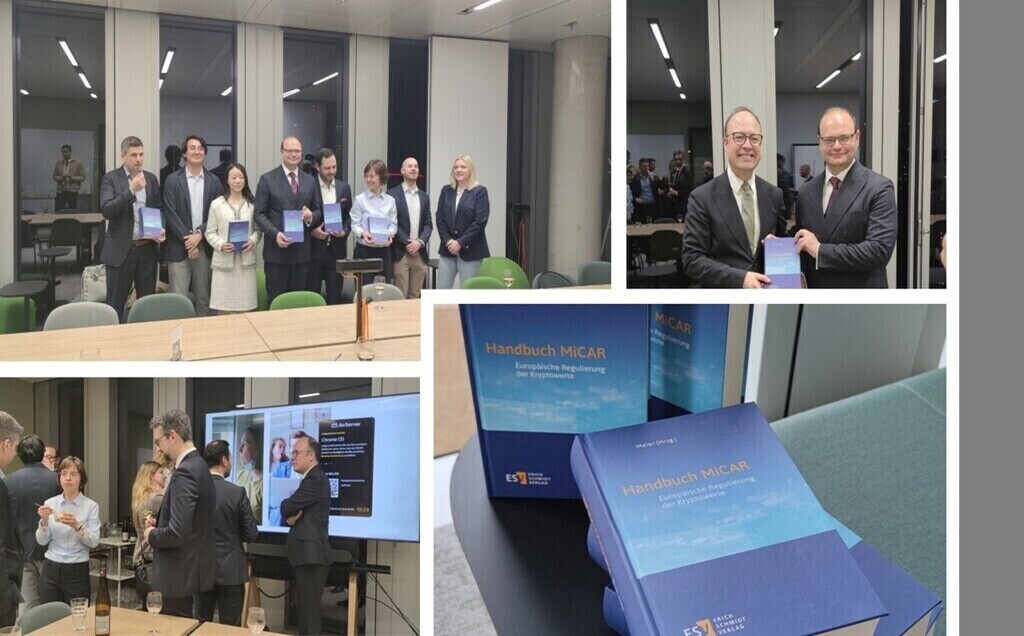
Initial meeting

Apr 08, 2024

Lending Business and Subordinated Loans – What to Consider When Issuing Subordinated Loans on a Regular Basis

In principle, the German Banking Act (KWG) makes the lending business a banking business and thus a regulated activity subject to authorization. This applies in any case if the business is conducted in Germany on a commercial basis or to an extent that requires a commercially organized business operation. The lending business concerns the granting of money loans and acceptance credits. The provision of such services therefore requires prior authorization from BaFin, which also exercises ongoing supervision over companies that engage in this activity. It is a criminal offense to conduct banking business, including lending business, without prior authorization if it exceeds the aforementioned scope. In particular, business models that initially intend to raise money by means of subordinated products in order to then in turn lend this money to other companies by means of loans should check whether they fall under the aforementioned authorization requirement. In this context, the question arises as to whether these transactions are generally prohibited if there is no BaFin license?

Exception Based on Agreement of a Subordination Clause

According to BaFin’s guidance note on the lending business, the general obligation to obtain prior permission to operate a lending business does not apply in cases where subordination clauses or loss-sharing agreements on the part of an entrepreneurial borrower mean that taking out a loan does not qualify as a deposit-taking business within the meaning of the KWG. In these cases, it should be possible to grant loans to companies without a license, even on a commercial basis or to an extent that requires a commercially organized business operation. Lending to private individuals on this scale, on the other hand, qualifies as a credit transaction requiring a permit despite the agreed subordination or agreed loss participation. In this respect, the regulation mirrors the assessment made by BaFin as part of its interpretation of the deposit business. According to this, funds received from third parties with a qualified subordination clause are not unconditionally repayable and are therefore not considered deposits within the meaning of the deposit business.

Exception for Appearing on the Market like a Credit Institution

However, the exception described above should not apply if the loan is granted by a market participant that acts like a credit institution on the market or in public. Such an appearance should be given in particular if the granting of the loan and the refinancing of the lender result in the overall image of a credit institution. In a case decided by the Administrative Court of Frankfurt, the plaintiff planned to raise investor funds via profit participation rights and also by issuing bearer bonds under the business model it had in mind. Here, the court found that there was no legal scope for a restrictive interpretation of the definition of a lending business analogous to the definition of a deposit-taking business if the company that intends to grant such loans refinances itself by accepting repayable funds from the public – even if this is by issuing bearer bonds. In this respect, in this constellation, loans to companies with qualified subordination also fall under the definition of lending business. It must therefore be decided on a case-by-case basis, taking into account the overall business model, whether the intended transaction of the company granting the loan may fall under this exemption.

FIN LAW

I.  https://fin-law.de

E. info@fin-law.de

The lawyer responsible for providing advice on business models involving financing in our law firm is attorney Dr. Lutz Auffenberg, LL.M.(London).

subscribe to Newsletter

    Contact

    info@fin-law.de

    Mar 25, 2024

    BaFin License, Crypto Whitepaper, Redemption Obligation – Which Requirements Does MiCAR Set for the Issuance of E-Money Tokens?

    The issuance of stable coins that derive their value directly from an official currency such as the euro or US dollar will only be possible in the European Union from June 30, 2024 in compliance with the regulations of the new Markets in Crypto Assets Regulation (MiCAR). As in the case of traditional, non-tokenized E-Money within the meaning of the Second E-Money Directive, strict requirements will also be imposed on the issuers of E-Money Tokens, which is why not every company will be eligible to issue E-Money Tokens under MiCAR. Rather, this privilege will only be granted to licensed and supervised credit institutions and e-money institutions. In Germany, a BaFin license will therefore always be required for the issuance of E-Money Tokens under MiCAR. However, MiCAR also imposes further obligations on issuers of such Tokens. For example, issuers of E-Money Tokens must prepare a comprehensive crypto whitepaper containing the minimum information specified in MiCAR so that the Tokens may be offered publicly in Europe or authorized for trading on crypto exchange platforms, for example.

    MiCAR Places Content Requirements on Crypto White Papers for E-Money Tokens

    Prior to the public offering of E-Money Tokens in the European Union, the issuer holding a BaFin liecense must prepare a crypto whitepaper and publish it on its website, and submit it to its competent authority – BaFin in Germany – no later than 20 working days prior to publication. In the crypto whitepaper, the issuer of the E-Money Token must, among other things, provide information about itself and how the E-Money Token works, the manner of the planned public offering or authorization for trading, the rights and obligations associated with the E-Money Token, the associated risks and also the main adverse effects of the underlying consensus mechanism on the climate. In addition, the crypto whitepaper must contain numerous warnings, such as the lack of deposit protection and the fact that the crypto whitepaper has not been approved by a supervisory authority. Overall, the crypto whitepaper must be formulated in a fair and comprehensible manner and must not contain any misleading statements. The crypto whitepaper must be written in a language of the issuer’s home country or in a language commonly used in the international financial community. Especially if the E-Money Tokens are not only to be offered in Germany, it is therefore advisable to prepare a crypto whitepaper in English.

    Redemption Obligation and Interest Prohibition as Restrictions under Private Law

    The MiCAR also imposes obligations on issuers of E-Money Tokens in terms of private law. Of crucial importance in this respect is the redemption obligation enshrined in the regulation, which guarantees the bearers of E-Money Tokens the right to redeem the Tokens in legal tender at any time at their nominal value. Issuers holding a BaFin license may not charge any fees for the exchange. The MiCAR legislator is also strict with regard to the possibility of paying interest on balances in E-Money Tokens. Interest may not be granted in relation to E-Money Tokens. The prohibition of interest applies not only to the issuers of E-Money Tokens, but also to crypto service providers, who are not allowed to grant interest in connection with the crypto services they provide. The MiCAR clarifies that interest within the meaning of the prohibition of interest shall also include all remuneration and other benefits in connection with the ownership of E-Money Tokens.

    Attorney Lutz Auffenberg, LL.M. (London)

    I.  https://fin-law.de

    E. info@fin-law.de

    The competent lawyer for the application of a MiCAR license and advice on issuances of E-Money Tokens and for obtaining a BaFin license in our law firm is Attorney Lutz Auffenberg, LL.M. (London).

    subscribe to Newsletter

      Contact

      info@fin-law.de

      Mar 18, 2024

      The MiCAR Crypto Asset Whitepaper – Can the Obligation to Create also Affect the Operator of a Trading Platform?

      The Markets in Crypto Assets Regulation (MiCAR) will come into full force on December 30, 2024. From this date, the regulations relating to crypto asset whitepapers will also apply. Among other things, these will require providers who publicly offer crypto assets other than asset referenced tokens or e-money tokens to prepare, submit and publish a corresponding crypto asset whitepaper to the competent authority. The same obligations apply to persons who apply for the authorization of such crypto assets for trading. Exceptions to this obligation arise from the MiCAR itself, such as in the case of a public offer to fewer than 150 natural or legal persons or exclusively to qualified investors. An exception to the obligation to prepare a MiCAR whitepaper upon authorization of the crypto asset for trading exists if the crypto asset in question is already authorized for trading within the Union and a corresponding MiCAR whitepaper has been prepared and the person responsible for preparing the whitepaper consents to its use in writing. In this context, the issuers of crypto assets are therefore primarily obliged to prepare a whitepaper. They will regularly have a corresponding interest in both the public offering of the crypto assets and their authorization for trading. But can these obligations also apply to the operator(s) of a trading platform?

      Operator of a Trading Platform as a Provider of Crypto Assets in the Context of a Public Offering

      In the context of MiCAR, the term provider refers to a natural or legal person or another company that publicly offers crypto assets. Whether the operator of a trading platform can fall under this definition is likely to be a question of the specific case. According to MiCAR, the mere authorization to trade or the publication of bid and ask prices does not qualify as a public offer of crypto assets. In this respect, an operator of a trading platform would only be obliged to prepare a MiCAR whitepaper as a provider if its activities went beyond this. However, not every additional activity should automatically trigger the obligation for the operator to prepare a whitepaper. Rather, the activity of the operator must constitute a public offer itself. This means that the information published about the crypto asset must contain the terms of the offer in order to enable potential investors to decide whether to purchase the crypto asset. It would be desirable if ESMA were to publish corresponding guidelines on when a public offer exists for crypto assets that are already listed.

      Operator of a Trading Platform as Initiator for the Authorization of Crypto Assets for Trading

      If the operator of a trading platform is the initiator for the authorization of the crypto asset for trading, it is also responsible for ensuring that the corresponding crypto asset whitepaper is published if it has not yet been published in the cases prescribed by MiCAR. Specifically, the legislator is focusing here on the “initiative” of the operator of the trading platform. Generally, the initiative for authorization to trade will probably come from the issuer or, for example, the issuer’s distribution partner. However, if the initiative comes from the operator of the trading platform itself, it should also be subject to the corresponding obligations. Unfortunately, the regulation does not specify when exactly the initiative for the authorization of a crypto asset for trading comes from the operator or another person. In this respect, operators of trading platforms are advised to carry out a precise case-by-case examination. This should apply all the more to operators whose business model includes the tokenization of financial products and their distribution in addition to operating a trading platform. Depending on the field of activity, the threshold for becoming an initiator could be exceeded relatively quickly.

      Attorney Dr. Konrad Uhink

      I.  https://fin-law.de

      E. info@fin-law.de

      The lawyer responsible for providing advice on MiCAR whitepaper creation in our law firm is attorney Dr. Konrad Uhink.

      subscribe to Newsletter

        Contact

        info@fin-law.de

        Mar 11, 2024

        The Stable Coin in Europe – Who Can Issue Asset-Referenced Tokens (ART) Under MiCAR?

        In just over three months, the provisions of the Markets in Crypto Assets Regulation (MiCAR) on Asset Referenced Tokens (ART) and Electronic Money Tokens (EMT) will come into force. MiCAR will then ensure strict rules for the creation and offering of so-called stable coins in the EU. Issuers of stable coins will then have to fulfill numerous obligations designed to ensure the stable value of stable coins and provide investors with the highest level of security. This already shows that issuing ARTs in the EU will be a highly complex undertaking in the future. In the case of Asset Referenced Tokens, the stable value of the token is derived from another value or right or a combination thereof, as defined in the MiCAR. The reference value can therefore be composed very differently. As long as the composition leads to a stable value of the ART, the MiCAR regulations must be observed by the issuer, but also by other types of providers such as trading platforms offering ART. But who will actually be allowed to issue Asset Referenced Tokens in the EU from June 30, 2024?

        Issuer of Asset Referenced Tokens (ART) Requires a MiCAR License

        The issuer status is of central importance for the existence of stablecoins under the new regulation. Without an issuer – according to the MiCAR legislator’s approach – there is no stable coin. Therefore, from June 30, 2024, the public offering of Asset Referenced Tokens in Europe will in principle only be possible to be carried out by the issuer of the relevant ART itself. The same applies to an application for authorization of an ART for trading. In addition, issuers of Asset Referenced Tokens must generally obtain a license under MiCAR prior to commencing the public offering of their ART. The application for approval is comprehensive and must include a detailed business plan and detailed descriptions of the future issuer’s business organization. In addition, the management bodies must be professionally suitable and reliable and the owners of significant shareholdings must have successfully completed an acquisition approval procedure. A detailed crypto whitepaper on the planned ART must also be prepared. However, if the future issuer is a credit institution, no application for authorization as an issuer is required. It is then sufficient for the credit institution to provide the competent authority – BaFin in Germany – with specific information on the project and compliance with the MiCAR compliance requirements ninety days prior to the first issue.

        No Need for a MiCAR License for ART Issuers in Certain Exceptional Cases

        MiCAR does not require issuers of Asset Referenced Tokens who have only issued ARTs with an average value of not more than EUR 5,000,000 over a period of twelve months to apply for a license. In such cases, the legislator did not consider the strict rules for issuers of Asset Referenced Tokens to be appropriate. There is also an exception for issuers of ARTs that can only be held by qualified investors and the public offering of these ARTs is also aimed exclusively at such qualified investors. In these cases, MiCAR assumes that the investors have sufficient knowledge to be able to assess the professionalism of the issuer and the financial soundness of the Asset Referenced Tokens issued by the issuer. In both exceptional cases, however, the issuer must nevertheless prepare a crypto whitepaper in accordance with MiCAR regulations and submit it to the competent authority in its home Member State.

        Attorney Lutz Auffenberg, LL.M. (London)

        I.  https://fin-law.de

        E. info@fin-law.de

        The competent lawyer for the application of a MiCAR license and advice on issuances of stable coins in our law firm is Attorney Lutz Auffenberg, LL.M. (London).

        subscribe to Newsletter

          Contact

          info@fin-law.de

          Mar 04, 2024

          The Electronic Stock Is Now Officially Introduced – What Should Be Considered?

          The act on the financing of investments to secure the future (Future Financing Act) came into force for the most part on December 15, 2023. Among other things, the act is intended to facilitate access to the stock market and the procurement of equity capital. The Future Financing Act amended the Electronic Securities Act (eWpG) so that bearer and registered stocks are now explicitly covered by the scope of the eWpG. This dematerializes the stock. The previously common securitization of stocks, for example in a global certificate, is no longer mandatory. Instead, electronic stocks are also treated as objects, which establishes security and transfer functions such as acquisition in good faith for electronic stocks. An electronic security is issued by the issuer making an entry in an electronic securities register instead of issuing a securities certificate. The following explanations are intended to highlight some of the practical aspects associated with the new electronic stock.

          Registered Stocks Can Be Issued as Crypto Securities

          The eWpG establishes two types of electronic securities, the central registry security and the crypto security. The central registry security is an electronic security that is entered in a central register. Such central registers can be maintained by central securities depositories or a custodian. A crypto security is an electronic security that is entered in a crypto securities register. A crypto securities register must be kept on a tamper-proof recording system in which data is logged in chronological order and stored in a manner that is protected against unauthorized deletion and subsequent modification, such as a blockchain. This makes it possible to issue tokenized stocks. Both the central registry security and the crypto security can be issued to different holders in individual and collective registration. The Future Financing Act provides that registered stocks can be issued as crypto securities and central registry securities. Bearer stocks, on the other hand, may only be issued as central registry securities. With regard to a possible IPO, however, it should be noted that only central registry securities in collective registration are covered for settlement in the securities giro and therefore only such securities are suitable for stock exchange trading, unless an exception applies under the current DLT pilot regime.

          Articles of Association of the Stock Corporation Must Provide for the Issuance of Electronic Stocks

          In order to issue electronic stocks, the articles of association of the stock corporation must provide for the exclusion of securitization. Registered stock in the form of a crypto security can only be issued if the articles of association expressly permit this. In the case of existing stocks, an issuer may replace a security issued by means of a global certificate or by means of individual certificates held in collective custody with a central registry security with the same content at any time and without the consent of the beneficiaries. Provided that the articles of association exclude the securitization of stocks, they must be amended. In all other cases of conversion, the approval of the shareholders is required. Conversely, electronic stocks can also be converted into securitized stocks. Because the exclusion of securitization must be provided for in the articles of association in order to issue electronic stocks, conversion into a paper certificate would require the exclusion of securitization to be removed.

          Attorney Dr. Konrad Uhink

          I.  https://fin-law.de

          E. info@fin-law.de

          The lawyer responsible for issues relating to securities law in our law firm is Attorney Dr. Konrad Uhink.

          subscribe to Newsletter

            Contact

            info@fin-law.de

            Feb 26, 2024

            Expansion to Europe – How Can Crypto Asset Service Providers from Third Countries Come to Europe Under MiCAR?

            With the Markets in Crypto Assets Regulation (MiCAR), the European venue has become much more attractive to the global crypto industry. In future, crypto asset service providers (CASP) will find uniform regulation for their business in the member states of the European Union, which clarifies that crypto services are legal in Europe and in which form. In addition, MiCAR offers European crypto asset service providers the opportunity to provide their crypto services throughout the European Union on the basis of just one MiCAR license from their competent authority which in Germany is BaFin. These options and the legal certainty associated with MiCAR are also of interest to CASP from the USA, Asia or other third countries such as Switzerland and the UK. Crypto asset service providers from these countries are therefore increasingly interested in how they too can benefit from MiCAR regulation and how an expansion into Europe can be structured in terms of supervisory law. Applying for their own MiCAR license from BaFin is the most obvious solution in this respect and offers the advantage of maximum freedom in terms of their own business organization. However, the expected very long processing time until a BaFin license is issued by the authority is problematic. Alternatives for expansion into Europe for non-European CASP could be cooperation with companies supervised under MiCAR or the acquisition of an already licensed CASP.

            Cooperation with Licensed Crypto Asset Service Provider as an Alternative to an Own MiCAR License

            One way for companies from a non-European country to expand into Europe may be to enter into a cooperation agreement with an EU company licensed for the intended crypto services. In practice, in many cases, arrangements are possible whereby the foreign company is included in the business organization of a CASP licensed by BaFin by way of an outsourcing agreement. The supervised crypto asset service provider is then responsible under supervisory law, while the company from the third country merely acts as a service provider for the licensed company from a regulatory point of view. Fronting and customer support can then be provided by the foreign company, for example. However, it must always be ensured that customers can recognize that the company with a BaFin license assumes civil and regulatory responsibility for the crypto services offered via the cooperation.

            Acquisition of a Crypto Asset Service Provider with BaFin License Requires BaFin Acquisition Approval

            Another alternative for crypto asset service providers from third countries may be to acquire a company in Europe that already has a BaFin license to provide the intended crypto services. Not only CASPs with a MiCAR license are eligible. Depending on the type of crypto services planned, certain investment firms with a BaFin license may also be considered as possible target companies. Similarly, under MiCAR, credit institutions are generally permitted to offer crypto services in addition to their actual business activities. In all these cases, however, a successful BaFin approval procedure must be completed prior to the acquisition. As part of the BaFin approval procedure, the authority has the opportunity to check the reliability of the acquirers interested in the acquisition and their intentions with regard to the acquisition. The information and evidence to be made available to BaFin during the BaFin approval procedure are numerous. Nevertheless, an approval procedure generally takes considerably less time than applying for a BaFin license. In this respect, acquiring a company supervised in Germany is a very interesting alternative for crypto asset service providers from third countries looking to expand into Europe.

            Attorney Lutz Auffenberg, LL.M. (London)

            I.  https://fin-law.de

            E. info@fin-law.de

            The competent lawyer for questions regarding a BaFin license under MiCAR, outsourcing and BaFin approval procedures in our law firm is Attorney Lutz Auffenberg, LL.M. (London).

            subscribe to Newsletter

              Contact

              info@fin-law.de

              Feb 19, 2024

              Public Warnings by BaFin – How Affected Companies Can React

              If companies wish to provide financial services such as investment advice or investment brokerage on a commercial scale, they require a BaFin license to do so. BaFin issues warnings via its website if companies offer financial services without a license. The basis for such warnings is Section 37 Subsection 4 of the German Banking Act (KWG). According to this provision, the authority may inform the public of this suspicion or finding, stating the name of the company, if and for as long as facts justify the assumption or it is established that a company is conducting unauthorized banking business or providing unauthorized financial services. The naming of the company’s real name in particular can result in considerable reputational damage for the company. This applies in particular to cases in which the press also reports on such an incident on the basis of public information, thereby increasing its reach. The following article is intended to show which principles BaFin must observe and how those affected can defend themselves if necessary.

              Anyone Providing Financial Services Must Possess a BaFin License

              The prerequisite for informing the public is that it is established or suspected that a company is providing unauthorized financial services, i.e. is operating on the market without the required authorization from BaFin. The provision of Section 37 Subsection 4 KWG serves the purpose of collective consumer protection and is intended to ensure that the public can be informed of potentially unauthorized activities at an early stage in order to minimize the damage to depositors and investors and to Germany as a financial marketplace. What is striking is that even the initial suspicion of BaFin is considered sufficient basis for publication. The authority may even make use of its right to issue a public warning if a company does not carry out the unauthorized activities, but merely gives the appearance of doing so publicly, for example through advertising measures. BaFin is therefore not obliged to formally intervene against the company first and only then publish the warning. It may publish its suspicions and warn the public at an early stage and prior to taking formal measures. However, the company concerned must always be heard by the authority before a decision on publication is made.

              Affected Parties Can Take Action Against Publication

              Due to the significant impact that a public warning by BaFin can have on the companies concerned, the authority must observe the principle of proportionality. If it turns out that the information published by BaFin is incorrect or that the underlying circumstances have been incorrectly reproduced, BaFin must inform the public of this in the same way as it previously published the information in question. As the publication on the website is an actual administrative action by BaFin, an action for a declaratory judgment aimed at establishing that the information provided to the public was unlawful or that the information was inadequately corrected or an action aimed at the publication of corrected information may be considered. By way of urgent legal protection, an application can be made for a temporary injunction, such as the deletion of certain information from the BaFin website until a decision is reached on the main issue.

              Attorney Dr. Konrad Uhink

              I.  https://fin-law.de

              E. info@fin-law.de

              The lawyer responsible for analyzing the legality of BaFin warnings in our law firm is Attorney Dr. Konrad Uhink.

              subscribe to Newsletter

                Contact

                info@fin-law.de

                Feb 12, 2024

                The BaFin License According to MiCAR – Which Application Variants Are Available for Crypto Asset Service Providers?

                The MiCAR regulations on crypto services and crypto Asset service providers (CASP) will be applicable at the end of this year. The German legislator is already positioning itself and has published a government proposal for a Crypto Markets Supervision Act (KMAG), which will regulate how BaFin is to process license applications in accordance with MiCAR. For market participants, the transition to MiCAR means that they may have to approach the supervisory authority again in order to create the conditions for offering crypto services that are permitted under supervisory law once the MiCAR regulations come into force. However, not all crypto asset service providers will have to submit a basic initial application to BaFin. For companies that already hold a license under the current national crypto regulation or under applicable supervisory law, MiCAR provides for simplified procedures for obtaining the required BaFin license. But what types of procedures are available to the individual crypto asset service providers in this respect?

                Complete Application for BaFin License According to MiCAR Required for Initial Registration

                As expected, the most difficult type of procedure is applicable in the case of companies that are not yet regulated. Such CASPs will have to submit a complete license application to BaFin and may only become operational once BaFin has issued the requested license. The initial regulatory capital required under MiCAR, a proper business organization that covers all applicable requirements under MiCAR in relation to the crypto service to be provided and a viable business plan for the planned business model must be submitted. The directors of the CASP must be fit and proper and reliable. The shareholders and owners of the applicant company must also be reliable and provide appropriate evidence. According to the provisions of MiCAR, BaFin must confirm receipt of an application for authorization within 5 working days and then inform the applicant within 25 working days whether the application is complete. If this is not the case, BaFin must grant the applicant a rectification period at its own discretion. Should the application still be incomplete after expiry of the rectification period, BaFin may reject the application. In contrast, BaFin must decide on a complete application within 40 working days.

                Banks and Investment Firms Benefit from Simplified Procedure for MiCAR License

                For banks and investment firms that already hold a BaFin license for their business operations, the MiCAR provides considerable privileges. From the legal effect of MiCAR, credit institutions will also be allowed to provide crypto services if they notify BaFin of this at least 40 working days prior to offering crypto services for the first time. A separate MiCAR license is not required. In particular, the notification must contain a viable business plan with regard to the crypto services to be provided and also describe how the bank’s business organization will be structured in the future with regard to crypto services in a crypto-specific manner. After 20 working days, BaFin must state whether the notification is complete. As soon as the notification is complete, the credit institution may provide the planned crypto services. Investment firms can also benefit from this simplification, however, based on the notification procedure, they may only provide those crypto services for which they have a corresponding authorization as an investment firm. There is also a special feature for companies that are permitted to provide crypto services under national law on 30 December 2024 and apply for a MiCAR license from BaFin by 1 July 2025 at the latest. Such companies – such as crypto custodians with a license under the German Banking Act (KWG) – only have to prove to BaFin that they meet the additional obligations arising from MiCAR for their business model in order to obtain the MiCAR license. A complete application does not have to be submitted.

                Attorney Lutz Auffenberg, LL.M. (London)

                I.  https://fin-law.de

                E. info@fin-law.de

                The competent lawyer for questions regarding a BaFin license under MiCAR in our law firm is Attorney Lutz Auffenberg, LL.M. (London).

                subscribe to Newsletter

                  Contact

                  info@fin-law.de

                  Feb 05, 2024

                  Raising Money via the Capital Market – What Financial Information Must Be Included in a Securities Prospectus & a Securities Information Document (WIB)?

                  As an alternative to a bank loan, companies can raise money from investors via the capital market. This can be done through a variety of financial instruments. The most common and best known in this context are stocks as equity instruments and bonds for raising debt or hybrid capital. The financial instruments can be represented classically in securities certificates or in electronic form. Irrespective of the form of the instrument used to raise capital, however, it should be noted that an information document must be published in the case of a public offer to a large number of retail investors. In the case of large-volume issues, this is generally a securities prospectus. The information that must be included in the prospectus is specified in the Prospectus Regulation and other accompanying regulations. For issues of up to EUR 8 million in Germany, there is the alternative option of using a securities information document (WIB) of up to four pages in length. The content requirements of the WIB are based on the German Securities Prospectus Act (WpPG). One important piece of information for investors is the financial situation of the issuer. Accordingly, it is regularly required that historical financial information be included in the documentation. Particularly in the case of young or small companies as issuers, it is therefore necessary to check in advance whether they can meet the requirements.

                  Securities Prospectus has the Strictest Requirements

                  The requirements for historical financial information are the strictest for a securities prospectus under the Prospectus Regulation. For equity securities such as stocks offered to retail investors, the audited historical financial information for the last three years must be included as well as an auditor’s report for each financial year. In the case of consolidated financial statements, these must at least be included. Where the issuer is required to prepare financial statements in accordance with international accounting standards, this financial information must be included. Should the issuer not be obliged to do so, the financial information may also be prepared in accordance with national accounting standards such as the German Commercial Code (HGB). In this case, it must contain at least the balance sheet, the income statement, an overview of all changes in equity, the cash flow statement, the accounting methods and explanatory notes. In these cases, smaller companies in particular must check whether their accounting meets the specified requirements or whether they may have to prepare additional financial information in accordance with the aforementioned requirements. The same applies, with a few simplifications, to the historical financial information for non-equity securities for small investors such as bonds. Here, the period to be reported is two years instead of three.

                  Simplifications for SMEs and Small Volume Issues

                  Under the Prospectus Regulation, small and medium-sized enterprises (SMEs) have the option of drawing up a so-called EU Growth Prospectus. In terms of content, this has fewer requirements than a regular securities prospectus. This also applies to the financial information. For example, only the last two financial years have to be included instead of three in the case of equity securities. If the balance sheet is prepared in accordance with national accounting standards, no cash flow statement and no statement of changes in equity must be presented. In the case of non-equity securities, only the last financial year must be included, and no cash flow statement must be included if the issuer prepares its financial statements in accordance with national accounting standards. A WIB can be used for issues of up to EUR 8 million in Germany. In the case of a WIB, the issuer’s debt-equity ratio calculated on the basis of the most recently prepared annual financial statements must be included. Furthermore, a reference to the most recent annual financial statements must be included and it must be stated where these can be obtained. These simplifications can make the preparation of the prospectus or WIB much easier, especially for smaller and young companies, as they can result in no new financial reports having to be prepared.

                  Attorney Dr. Konrad Uhink

                  I.  https://fin-law.de

                  E. info@fin-law.de

                  The lawyer responsible for providing advice on the issuance of securities as well as the creation of securities prospectuses and WIB in our law firm is Attorney Dr. Konrad Uhink.

                  subscribe to Newsletter

                    Contact

                    info@fin-law.de

                    Jan 29, 2024

                    Asset Referenced Token – What Exactly Are ART Under MiCAR?

                    Titles III and IV of the Markets in Crypto Assets Regulation (MiCAR) will become legally effective in the European Union on June 30, 2024. From this date, issuers of Asset-Referenced Tokens (ARTs) and E-Money Tokens (EMTs) will require authorization from BaFin or the competent supervisory authority in their country of domicile to issue such tokens. But what types of tokens will actually qualify as ARTs under MiCAR? While the MiCAR definition of E-Money Tokens requires the value of the token to be pegged to the value of an official currency, the interpretation of the MiCAR definition for Asset- Referenced Tokens is much more difficult. According to this definition, those crypto assets that are not E-Money Tokens and that purport to maintain value stability by reference to other values, rights or currencies or combinations thereof are to constitute Asset-Related Tokens. A particular problem with the definition is the requirement of stability of value, as it remains unclear what specific requirements will be placed in this regard.

                    When Does a Token Have a Stable Value?

                    According to the definition in MiCAR, the decisive factor for the qualification of a token as an ART is, in particular, the question of whether the token is intended to create a stable value. In principle, many types of tokens could be described as referencing assets, as assets of all kinds could be considered here. This could also include, for example, tokens that are used to digitally represent objects from the real world. Examples would be tokenized collectible playing cards or other fungible collectibles. However, the definition of Asset-Referenced Tokens also presupposes that value stability is to be maintained. Unfortunately, the MiCAR does not specify the term “stable value”, so that it is questionable when a stable value is given in the required sense. In any case, it will not be sufficient in this context if the value of a token is merely linked to the value of an object in the real world. In such cases, the value of the token can always be determined on the basis of the value of the reference object. However, the value cannot then necessarily be described as stable.

                    Regulation for Asset-Referenced Tokens Targets Parallel Currencies

                    Historically, the regulation of both E-Money Tokens and Asset-Referenced Tokens goes back to the intention of the legislator to strictly regulate the creation of parallel currencies in the form of tokens. The reason for the inclusion of the regulations on ART and E-Money Tokens was the now abandoned plan of the Meta Group to create the substitute currency “Diem”. Taking this legislative objective into account, the value stability required in the definition of ART must at least be suitable for keeping the value of the relevant tokens stable enough to allow them to be used as a parallel currency. Nevertheless, the contours of the characteristic of value stability remain blurred. However, a reliable interpretation aid can be expected in the form of the technical regulatory standards on ART still to be developed by ESMA.

                    Attorney Dr. Lutz Auffenberg, LL.M. (London)

                    I.  https://fin-law.de

                    E. info@fin-law.de

                    The competent lawyer for questions regarding a BaFin license under MiCAR and advice on Asset-Referenced Tokens (ART) in our law firm is Attorney Dr. Lutz Auffenberg, LL.M. (London).

                    subscribe to Newsletter

                      Contact

                      info@fin-law.de

                      Jan 15, 2024

                      SEC Approves Exchange-Traded Bitcoin ETFs – Is This Also Possible in Germany?

                      On January 10, 2024, the United States Securities and Exchange Commission (SEC) approved the listing and trading of a number of shares in Bitcoin Spot Exchange Traded Funds (ETF). Spot ETF in this context means that the fund tracks the up-to-the-second Bitcoin price on a one-to-one basis. Furthermore, the fund actually holds bitcoins. This makes it possible for institutional investors to invest in Bitcoin without having to purchase Bitcoin directly. The SEC has for many years objected to the approval of Bitcoin ETFs, but now sees many advantages in the approval. This is because investing in regulated products such as ETFs also entails information obligations towards investors.  Of course, there is also ongoing supervision by the SEC. For example, the existing regulations on investment funds and standards of conduct for fund providers and managers apply to the purchase and sale of approved Bitcoin ETFs. Thus, broker-dealers who recommend investments in ETFs to retail investors must act in their best interests. The SEC emphasizes that no crypto trading platforms or intermediaries were approved or endorsed in its January 10, 2024 decision. The approval of Spot ETF is therefore intended to prevent investments in unregulated financial products that are related to Bitcoin. In Germany, a spot ETF that only tracks the value of Bitcoin would not be permitted. In Germany, such funds must always invest in several securities.

                      Wasn’t There Already a Bitcoin ETF?

                      Bitcoin ETFs have already been marketed and approved in the past. However, these were not spot ETFs in the USA. No real Bitcoin was deposited. These were regularly so-called Bitcoin Future ETFs. Unlike ETFs, Bitcoin futures are traded on specialized trading venues based on dates and future prices. These futures are intended to allow investors to participate in price gains without holding Bitcoin. Unlike a spot ETF, however, the problem with futures is that they may react with a time lag. Institutional investors are also regularly not allowed to invest in such products without a physical deposit. The approval of Bitcoin spot ETFs in particular makes Bitcoin potentially accessible to a larger group of investors. Should a price structure emerge in which the fees for the acquisition of shares in a Bitcoin Spot ETF are more favorable than the procurement of Bitcoin directly via a crypto exchange, investors can also benefit from this accordingly.

                      Bitcoin May Also Be Used as a Reference Value in Germany

                      As explained above, it is currently not possible to launch a pure Bitcoin spot ETF in Germany. However, Bitcoin can be used as a reference value for other financial products. The term Bitcoin Exchange Traded Notes (ETN) refers to debt securities that are traded on the stock exchange and whose payout conditions are based on the performance of Bitcoin. The structuring options are numerous. For example, it is possible to bet on falling or rising prices or to integrate leverage into the product. In Germany, if these products are offered to retail investors, they are subject to the documentation requirements under the Prospectus Regulation or the WpPG or the Regulation on Key Information Documents for Packaged Retail and Insurance-based Investment Products (PRIIPs). In this respect, there may be an obligation to publish a securities prospectus or a key information document. Financial contracts for difference (CFDs) can also use Bitcoin as a reference value. However, it is particularly important to ensure that CFDs entered into with retail investors meet the requirements of the BaFin general ruling of July 23, 2019. With the general ruling, BaFin restricted the marketing, sale and distribution of CFDs to retail investors in Germany.

                      Attorney Dr. Konrad Uhink

                      I.  https://fin-law.de

                      E. info@fin-law.de

                      The lawyer responsible for providing advice on the issuance of electronic securities and security tokens in our law firm is attorney Dr. Konrad Uhink.

                      subscribe to Newsletter

                        Contact

                        info@fin-law.de

                        Jan 08, 2024

                        Crypto Service Providers in the DeFi Space – Is Money Laundering Regulation a Dealbreaker for an Engagement in Decentralized Finance?

                        Decentralized Finance (DeFi) has been a megatrend in the crypto sector for several years now. The idea is to create a financial market without intermediaries. Participants should be able to interact directly and immediately with decentralized smart contracts, for example to carry out swaps involving crypto assets without having to use the services of a crypto asset service provider. However, regulated market participants are also recognizing the potential of DeFi and are working on business models that provide for automated liquidity procurement via DeFi protocols and their smart contracts, for example. Nevertheless, regulated crypto service providers (CASP) are not completely free to organize their business activities. Rather, they have to observe numerous compliance regulations, which can make the creation of corresponding business models more difficult and sometimes even impossible. CASP face particular difficulties in this respect due to money laundering prevention regulations.

                        Are DeFi Business Models Compatible with Anti-Money Laundering and Anti-Terrorist Financing Regulation?

                        For private individuals, the use of DeFi protocols is easier than for regulated crypto asset service providers in that they are not obliged by the anti-money laundering laws of the European Union and the German legislator. The situation is different for crypto asset service providers with a license under the German Banking Act (KWG), the German Investment Firms Act (WpIG) or, in the future, the Markets in Crypto Assets Regulation (MiCAR). They have to fulfill identification, verification and information procurement obligations when carrying out crypto transactions. In this respect, crypto asset service providers regulated under the KWG and WpIG are also obliged entities within the meaning of the German Money Laundering Act (GwG) and the national Crypto Asset Transfer Regulation (KryptoWTransferV). In future, crypto asset service providers regulated under MiCAR will also be obliged entities under anti-money laundering law and consequently be subject to the revised EU Travel of Funds Regulation (TFR). All of the aforementioned legal standards assume that all parties involved in a crypto transaction are identifiable legal entities. If this is the case, the originator and recipient of crypto transactions as well as the crypto asset service providers entrusted with the execution can be identified and verified. They may also be requested to provide information such as names, addresses or details of the origin of the crypto assets. However, the fulfillment of these obligations for regulated crypto asset service providers is problematic in the case of smart contracts in DeFi protocols that are not backed by an identifiable legal entity. The question then arises as to whether the non-fulfilment of the obligations under money laundering law means that the crypto asset service provider concerned cannot interact with the DeFi protocol in principle, because the legal consequence of non-fulfilment is that the transaction may not be executed.

                        Classification of Smart Contracts under Money Laundering Law Will Be Decisive

                        It is true that the legal consequences provided for by the TFR and the German AML Act in the event of non-compliance with anti-money laundering prevention obligations can lead to the impossibility of carrying out crypto transactions with the smart contract in question. However, for the legal consequences to be triggered, the corresponding obligation must first also apply in the event of interaction with the DeFi protocol. There may be doubts about this if there is no identifiable legal entity underlying the smart contract in question. This is because the originators and beneficiaries required as transaction parties to trigger the obligation to provide or obtain information under the TFR are defined in the TFR to the effect that they must be persons. However, according to the general understanding, persons can only be natural or legal persons, or, if interpreted broadly, partnerships. A mere smart contract, on the other hand, can hardly be regarded as a person in the required sense. The concept of contractual partner, which is relevant in the context of the applicability of the obligations under the German AML Act, also causes difficulties in the case of mere smart contracts in DeFi. This is because a contracting party can only be someone who can be legally bound by a contract. However, without a legally capable operator, a smart contract will not have such legal capacity. It is impossible to predict whether these arguments will find their way into the administrative practice of BaFin and the relevant European supervisory authorities. What is clear, however, is that a specific and practicable legal regulation – preferably at the European level – should be created for the interaction of regulated CASP with DeFi protocols. Particularly in view of the dangers that can arise for consumers when using DeFi protocols independently, the legal facilitation of the involvement of regulated crypto asset service providers in DeFi protocols should also be desirable from a political perspective.

                        Rechtsanwalt Dr. Lutz Auffenberg, LL.M. (London)

                        I.  https://fin-law.de

                        E. info@fin-law.de

                        The competent lawyer for questions regarding business models connected to Decentralized Finance (DeFi) and Anti-Money Laundering regulation in our law firm is Attorney Dr. Lutz Auffenberg, LL.M. (London).

                        subscribe to Newsletter

                          Contact

                          info@fin-law.de

                          to top