Initial meeting

May 24, 2021

Tokenized Debenture Bonds and Deposit Business – What must STO Issuers Observe during the Planning Process?

Next to the credit business, the deposit business is probably the most prominent banking business. According to the legal definition, deposit business is conducted, if unconditionally repayable funds are accepted by a third-party. However, the definition of deposit business intends for an important exemption for cases in which the repayment claim is securitized in bearer or registered bonds, in order to offer commercial enterprises of the real economy an alternative to bank financing. In cases of tokenized debenture bonds, the participating parties are confronted with the problem, that Germanies highest courts as well as BaFin only deem a right resulting out of a debenture bond as securitized, if it is embodied in a paper document as a physical object, so that the bearer of the document can legitimize himself as the bearer of the right and assert said right against the issuer of the debenture bond. Tokens as merely virtual positions are therefore generally unable to trigger the aforementioned exemption for debenture bonds.

DOES THE NEW LEGISLATION ON ELECTRONIC SECURITIES (EWPG) OFFER A SOLUTION?

The introduction of electronic debenture bonds is particularly devised to serve the purpose of enabling bona fide transfers of unsecuritized debenture bonds, meaning that the acquirer of an electronic security will effectively become the owner of the security, even if the transferor was not the owner of the security and the acquirer had no knowledge of this fact. This is achieved by the registration of electronic debenture bonds in an electronic securities registry. Should the debenture bond be tokenized, it must be registered in a specific crypto securities registry. The aforementioned exemption within the definition of the depository business has not been adjusted by the German legislator when it introduced the electronic security to the German law, meaning that the exemption is still only applicable to securitized – paper-based – debenture bonds. However, the newly introduced eWPG expressly states that electronic securities – and therefore also crypto securities as a subtype of electronic securities – shall have the same legal effects as securities, which are securitized in paper form as long as the eWPG does not stipulate otherwise. This clear and unambiguous stipulation should be a sufficient argument for the equation of crypto securities with securitized securities for the applicability of the exemption in the definition of the deposit business. 

WHAT ARE THE OTHER OPTIONS FOR TRADITIONAL SECURITY TOKENS?

Issuers of security tokens are not mandatorily obligated to issue their tokens as crypto securities. There are other ways to avoid the qualification as deposit business for the issuer, in cases in which tokenized debenture bonds are issued without them being registered in a crypto security registry, but instead in a “traditional” way without the privileges offered by the eWPG. The most common option is a contractual agreement which includes a qualified subordination clause in the token terms. According to the established administrative practice of BaFin, such qualified subordination clause excludes an unconditional repayment claim. Another highly attractive option is the provision of standard bank collaterals or comparable assurances for the default risk of the issuer. BaFin accepts collaterals in the aforementioned sense for the inapplicability of the depository business, if they are provided in a way that investors can make use of them immediately and in an uncomplicated way in the event that the issuer defaults on the repayment claim.  

Attorney Lutz Auffenberg, LL.M. (London)

I.  https://fin-law.de

E. info@fin-law.de

OUR BLOG ARTICLES IN A MONTHLY NEWSLETTER?

The FIN LAW Newsletter provides you with all blog articles of the month via monthly e-mail. Our newsletter is published regularly at the beginning of every month. Feel free to sign in to the FIN LAW Newsletter by clicking the button below. Of course can can sign off at any time if you do not wish to receive our newsletter anymore.

Sign in for Newsletter

subscribe to Newsletter

    Contact

    info@fin-law.de

    May 17, 2021

    The Dream of Tokenized Property – Is That Legally Possible?

    Currently, Non-Fungible Tokens (NFT) are in the state of a real hype. Unlike other blockchain tokens NFTs are not fungible in the sense that they are not interchangeable with other, identically designed tokens of the same kind. They are rather individual tokens which each represent a specific right or object. In this context, the idea of tokenized ownership right with regard to a specific object is very popular. The ownership of an NFT insofar is intended to represent the ownership of a specific object such as a car, a piece of art or a precious gem. That is the idea from a technical point of view. But is the tokenization of property rights feasible in a legally watertight way?   

    LEGALLY WATERTIGHT CONNECTION BETWEEN TOKEN AND PROPERTY RIGHT IS THE KEY REQUIREMENT

    The decisive aspect when it comes to the tokenization of property rights is the difficult task of connecting the token with the property in a legally watertight way. The German law generally does not intend for such a connection, because it is aligned with the fate of the respective object itself and not with the fate of the token. A contractually invoked dependency between property rights of a specific object and ownership of a specific token is also not possible, according to the current legal situation in Germany. This is because of the applicable “principle of abstraction” which differentiates between the contractual relations, which are subjected to the law of obligations and the property law, which defines property rights. Contracts can merely obligate a party to transfer property rights to someone else. The ownership of an object is never automatically transferred to the other party by entering into a contract with them. The actual transfer of the property rights to a specific object takes place disassociated from any contractual obligations by means of an agreement concerning the transfer of the property and the actual delivery of the object itself to the acquirer. The ownership of a virtual token is irrelevant according to the current legal situation. 

    ADDITIONAL OBSTACLES WITH INTERNATIONAL DEALS

    Parties hailing from different countries face additional problems when they try to transfer property rights. Property law is designed differently in different countries. Since property law cannot be modified by contractual arrangements, the attempt to connect a token with property rights may lead to critical complications. According to the German international private law rules, the law of the so-called res sitae, meaning the law of the jurisdiction in which the respective object is situated, is applicable. Should therefore e.g. the ownership of a piece of art being situated in Germany be transferred to a Japanese acquirer, German property law would be applicable for the fate of the property rights with the consequence that the ownership of a token would be irrelevant. 

    COULD CONNECTION BETWEEN TOKEN OWNERSHIP AND RIGHT OF DISPOSITION REGARDING THE OBJECT BE A SOLUTION?

    A possible way to tokenize property in accordance with German law could be to connect token ownership in the form of knowledge of private keys of a token with the power of disposition in a way so that exclusively the bearer of the private key could actually dispose of the respective object. In order to do so, the token would have to become a de-facto key to the object. Should the ownership of the token e.g. be necessary to open a safe, which holds the object being intended to be transferred, the transfer of the token ownership, comparable to the transfer of a safe key, could represent a delivery in the aforementioned sense. However, the ownership of the token would lose all relevance for the determination of the ownership of the object, as soon as the object would be taken out of the safe. Truly tokenized property is therefore only realizable in a very limited way under German law, even with the help of the aforementioned design.

    Attorney Lutz Auffenberg, LL.M. (London)

    I.  https://fin-law.de

    E. info@fin-law.de

    OUR BLOG ARTICLES IN A MONTHLY NEWSLETTER?

    The FIN LAW Newsletter provides you with all blog articles of the month via monthly e-mail. Our newsletter is published regularly at the beginning of every month. Feel free to sign in to the FIN LAW Newsletter by clicking the button below. Of course can can sign off at any time if you do not wish to receive our newsletter anymore.

    subscribe to Newsletter

      Contact

      info@fin-law.de

      May 10, 2021

      Dispute over Stock Tokens – Transferable Security or unregulated Blockchain Tokens?

      By the end of April, BaFin announced via their website that they have reasons for suspecting that a well-known crypto exchange publicly offers securities in the form of so-called stock tokens in Germany without required security prospectuses. Stock tokens are one of the newest innovations in the crypto industry. The way that a stock token works is via a special-purpose entity, which acquires stocks and then tokenizes the value of the acquired portfolio. The hereby created tokens are then offered to interested investors on crypto exchanges, which in turn can participate at the price development of the underlying stocks. The specific legal design of a stock token is dependent on the respective provider and the tokenization options offered by the chosen jurisdiction. To date, it is strongly disputed, if stock tokens are securities pursuant to German regulatory law, as stated by BaFin.

      ARE STOCK TOKENS STOCKS OR COMPARABLE SECURITIES PURSUANT TO THE EU-PROSPECTUS REGULATION?

      Everyone that publicly offers securities in the sense of the EU-Prospectus regulation is required to create a comprehensive security prospectus and have it authorized by the competent supervisory authority. Subsequently, the authorized security prospectus has to be published by the issuer and a copy of it has to be deposited at the supervisory authority. That way, investors can obtain all the necessary information in order to make an informed investment decision. The EU-Prospectus regulation classifies stocks as securities. In light of the aforementioned design, which involves a special-purpose entity, it is obvious, that investors of stock tokens do not directly acquire stocks. However, the regulation also defines other products as securities, if they are comparable to stocks or company shares. Stock tokens on the other hand do not entitle their bearers to acquire shares of the special-purpose entity. The ownership of stock tokens entitles investors solely to participate at the price development of the underlying stocks.

      ARE STOCK TOKENS SECURITIES IN THE FORM OF DERIVATIVE FINANCIAL PRODUCTS?

      The EU-Prospectus regulation next to stocks and comparable securities is also applicable to financial products, which entitle investors to a cash compensation that is derived from indexes or other metrics. The market value of stocks is such a metric, meaning that stock tokens may be securities in the form of derivative financial products. In order to qualify a financial product as a security in the sense of the EU-Prospectus Regulation it is also a mandatory requirement for the respective financial product to be transferable.

      ARE STOCK TOKENS TRANSFERABLE BETWEEN INVESTORS?

      Judging by the current discussion, the transferability of stock tokens seems to be the decisive factor for the answer to the question, if stock tokens can be qualified as securities pursuant to the EU-Prospectus regulation. The abovementioned crypto exchange argues in this context that investors are only able to trade the tokens on their platform with a regulated German securities trading Bank and that the tokens are therefore not directly transferable. BaFin in contrast argues that the transferability of a token can be assumed, if the token can technically and legally be transferred to another user. The fact that stock tokens can be acquired and sold back to the securities trading bank at any time, if the token bearer decides to do so is a strong indicator in favor of the transferability of stock tokens. The EU-Prospectus regulation does not differentiate for the qualification of a product as a security, if the investor can only transfer the product with a multitude of intermediaries of a trading platform or merely with a single market maker such as a securities trading bank.

      Attorney Lutz Auffenberg, LL.M. (London)

      I.  https://fin-law.de

      E. info@fin-law.de

      OUR BLOG ARTICLES IN A MONTHLY NEWSLETTER?

      The FIN LAW Newsletter provides you with all blog articles of the month via monthly e-mail. Our newsletter is published regularly at the beginning of every month. Feel free to sign in to the FIN LAW Newsletter by clicking the button below. Of course can can sign off at any time if you do not wish to receive our newsletter anymore.

      subscribe to Newsletter

        Contact

        info@fin-law.de

        Apr 26, 2021

        Investment Firms Act (WpIG) Passed the Bundestag – What Are the Implications for the Crypto Industry?

         The German Bundestag passed the new Investment Firms Act (WpIG) on the 15th of April 2021. The new legislation is scheduled to go into effect on the 26th of July 2021 and is intended to implement the statutory requirements of the European Investment Firms Directive (IFD). The new law will exclude small and medium-sized investment firms from the strict regulations of the German Banking Act (KWG), in order to subject them to a more fitting and suitable regulatory regime. According to the definition of the WpIG, investment firms are businesses which commercially or to an extend that requires a commercially organized business operation offer investment services and possibly associated ancillary services. Investment services in this context are largely those activities that are defined by the KWG as financial services, e.g. the financial commission business, investment brokerage services, investment advisory services, proprietary trading and the operation of a multilateral trading facility.

        IS CRYPTO CUSTODY BUSINESS ALSO INVESTMENT SERVICE PURSUANT TO THE WPIG?

        As of the 1st of January 2020, crypto custody services are defined as financial services, which are subject to authorization in Germany. However, since the European IFD does not regulate crypto custody services as services, that are subject to authorization, the WpIG in turn does not qualify the crypto custodian services as an investment service. The obligation of crypto custody service providers to obtain an authorization will therefore also in the future be determined by the regulations of the KWG. Companies providing other investment services related to crypto assets such as Bitcoin, Ether or Litecoin will have to apply for authorization according to the regulations of the WpIG, because the new legislation explicitly defines units of account as well as crypto assets as financial instruments in the sense of the WpIG. Companies dealing with crypto assets for own account (proprietary trading) or providing brokerage services (investment brokerage) may therefore qualify as investment firms pursuant to the WpIG. The majority of companies with crypto asset-based business models will therefore be subjected to the supervisory regime of the WpIG in the future.

        HOW DOES WPIG AUTHORIZATION DIFFER FROM THE RULES OF THE KWG?

        The applicability of the new rules to crypto service providers is not necessarily disadvantageous for them. One focal point of the new WpIG is the discharge of small and medium-sized, systematically not relevant firms, with regards to the capital requirements. The required minimum capital is slightly higher as it has been according to the regulations of the KWG. Companies intending to deal financial instruments for their own account have to show 750,000 euros instead of 730,000 euros. Investment advisors, investment brokers and financial portfolio managers without access to customer funds or customer securities must show 75,000 euros instead of 50,000 euros minimum capital and all other investment firms must show 150,000 euros minimum capital. On the other hand, investment firms authorized under the WpIG and ongoingly supervised by BaFin and the Bundesbank are not subject to the to the strict and static provisions of the CRR anymore, but instead must show a sufficient risk-bearing capacity. The exact requirements will have to be determined by the specific investment firms themselves in close coordination with the supervising authorities. An ongoing determination of the actual risks as well as sufficient risk-bearing capacity at all times will be required. Furthermore, medium-sized investment firms will also be required to guarantee a sufficient liquidity at all times.

        AT WHAT POINT IS AN INVESTMENT FIRM CATEGORIZED AS SMALL, MEDIUM-SIZED OR BIG?

        The categorization of investment firms as small, medium-sized or big results from the directly applicable European Investment Firms Regulation (IFR). Certain requirements must be fulfilled in order to categorize an investment firm as small. Specifically, the Assets under Management (AUM) must remain below 1.2 billion euros, the balance sheet total must remain below 100 million euros and the average total gross earnings may not exceed 15 million euros. Investment firms are categorized as medium-sized, if the IFR requirements are not entirely fulfilled. An investment firm is categorized as big, if BaFin categorizes the company as such or if the firm shows a balance sheet total in excess of 15 billion euros. Companies of the crypto industry will therefore regularly be categorized as small or medium-sized investment firms.

        Attorney Lutz Auffenberg, LL.M. (London)

        I.  https://fin-law.de

        E. info@fin-law.de

        OUR BLOG ARTICLES IN A MONTHLY NEWSLETTER?

        The FIN LAW Newsletter provides you with all blog articles of the month via monthly e-mail. Our newsletter is published regularly at the beginning of every month. Feel free to sign in to the FIN LAW Newsletter by clicking the button below. Of course can can sign off at any time if you do not wish to receive our newsletter anymore.

        subscribe to Newsletter

          Contact

          info@fin-law.de

          Apr 19, 2021

          Do dPoS Staking Providers Require Authorization in Germany?

          Prior to start of operations in Germany most blockchain-based business models require BaFin authorization, because of the legal qualification of most cryptocurrencies as financial instruments in the sense of the German Banking Act (KWG). The German legislator explicitly confirmed his administrative practice of BaFin being in place already since 2011 by explicitly regulating crypto assets as financial instruments and by introducing the financial service of crypto custodian service to the KWG, which is subject to authorization requirement. Nevertheless, the obligation to obtain authorization in accordance with the KWG is not automatically given as soon as a business model is related to cryptocurrencies. Instead, a BaFin authorization is only required if the business activity qualifies as a banking business or a financial service pursuant to the KWG.

          WHAT ARE DPOS STAKING PROVIDERS OFFERING TO THEIR CLIENTS?

          A rather new business model within the blockchain community is the offering of dPoS staking infrastructures. In this business model providers run servers which they let participate as nodes for the specific consensus-mechanism of blockchains which work on basis of the Delegated Proof-of-Stake (dPoS) mechanism. Customers may delegate their tokens to nodes of the specific blockchain in order to participate in the staking rewards generated by the nodes in form of newly created tokens. The delegation of tokens works via a smart contract on the underlying blockchain in the way that customers intending to delegate their tokens need to inform the smart contract that their tokens shall be delegated to a node of the provider. An actual transfer of tokens is not required. The tokens and the associated private keys remain entirely with the customer. The tokens that are newly generated as a result of participation in the consensus mechanism are credited by the smart contract both to the client as well as to the provider in the amount of the ratio as laid down in the smart contract.

          DPOS STAKING PROVIDERS DO NOT PROVIDE CRYPTO CUSTODIAN SERVICES

          The operation of dPoS staking infrastructuresthat are offered to customers for use is therefore a purely technical service in the first place. It is not a crypto custody service, because of the fact that at no point in time tokens are transferred and because the private keys to the tokens remain with the customer. According to the administrative practice of BaFin, crypto custody services always require access to the crypto assets respectively to the associated private keys of third parties. This mandatory requirement is generally not fulfilled by operators of dPoS staking infrastructures. The other two variants of the crypto custody business regarding neither fulfilled, because BaFin deems the possibility of disposal a base requirement also for these variants.

          ADDITIONAL SERVICES MAY TRIGGER THE OBLIGATION TO OBTAIN AUTHORIZATION

          Individually, the offering of dPoS staking infrastructures as a service does generally not trigger any authorization obligations pursuant to the KWG. However, this does not necessarily mean that there can never be any any additional services performed within the business model that can potentially trigger authorization requirements. Should for example a provider offer additional services such as the sale or brokerage of deals concerning the acquisition or disposal of tokens which are suited for staking, this additional service might trigger an authorization requirement, depending on the details of the specific case.

          Rechtsanwalt Lutz Auffenberg, LL.M. (London)

          I.  https://fin-law.de

          E. info@fin-law.de

          OUR BLOG ARTICLES IN A MONTHLY NEWSLETTER?

          The FIN LAW Newsletter provides you with all blog articles of the month via monthly e-mail. Our newsletter is published regularly at the beginning of every month. Feel free to sign in to the FIN LAW Newsletter by clicking the button below. Of course can can sign off at any time if you do not wish to receive our newsletter anymore.

          subscribe to Newsletter

            Contact

            info@fin-law.de

            Apr 12, 2021

            Token Sale as Public Offering or Private Placement – What are the differences?

            Over the last years, so-called token sales have emerged as a new method of financing for businesses. By such, companies that seek funding offer interested investors their self-created blockchain tokens for purchase. These tokens allow their bearers the assertion of certain connected rights vis-à-vis the issuer. The rights that can be associated with the tokens may be of very versatile nature, depending on the legal design of the tokens. Tokens may allow their bearers access to certain services of the respective issuer or they may grant discounts for services that are offered by the issuer within the specific business model. Alternatively or additionally, tokens can also be connected to return or repayment claims or to voting rights. According to the administrative practice of BaFin and depending on the specific nature of the connected rights, they may be qualified as digital vouchers or access permissions (so-called utility tokens), as alternative means of payment (so-called currency tokens), or as regulated investment products (so-called security or investment tokens). For the last category, the issuer is regularly confronted with the question, if the token sale can solely be conducted on the basis of a prospectus to be approved by BaFin and other, potentially required documentation.

            PUBLIC OFFERING OF SECURITY TOKENS AND INVESTMENT TOKENS GENERALLY REQUIRE PROSPECTUS

            In case that the offered tokens, respectively the connected rights represent transferable securities, shares in an investment fund or other asset investments for the token bearers according to the applicable regulations, a comprehensive sales prospectus and possibly further distribution documentation must be drawn up, approved by BaFin and be published by the issuer and every further offeror. Even though the applicable regulation regimes of the EU Prospectus Regulation, the Capital Investment Code (KAGB) as well as the Asset Investment Act (VermAnlG) intend for certain exemptions, these exemptions are all only applicable to offers that either target professional investors or that only have a small volume. Anyhow, all three regulatory regimes require a public offering of the tokens for being applicable. Should this essential requirement not be met by a token sale, the project would not be subject to prospectus or transparency obligations under the named regulatory regimes.

            AT WHAT POINT IS A TOKEN SALE A PUBLIC OFFERING?

            The EU Prospectus Regulation defines the public offering as a communication to persons in any form and by any means, presenting sufficient information on the terms of the offer and the products to be offered, so as to enable an investor to decide to purchase or subscribe for those products. According to its scope, the EU Prospectus Regulation only relates to securities. However, the definition can also be used for the interpretation of the term “public offering” in the context of asset investments and shares in investment funds, because neither the KAGB nor the VermAnlG contain a definition of their own. The offering of tokens is therefore public, if it is targeted at investors that are unknown to the issuer, respectively the offeror and if those unknown investors are informed about the essential parameters such as e.g. the purchase price. Usually the term “public offering” is interpreted in a rather broad way, so that it is not sufficient to withhold essential investment information from the potential investor to qualify the offering as not public. Should the offer only be targeted at investors that are known to the issuer, with which a private or business relation had been established prior to the offer, the offer may not be qualified as public. These private placements can be conducted without the prior creation of a prospectus other documentation.

            Attorney Lutz Auffenberg, LL.M. (London

            I.  https://fin-law.de

            E. info@fin-law.de

            OUR BLOG ARTICLES IN A MONTHLY NEWSLETTER?

            The FIN LAW Newsletter provides you with all blog articles of the month via monthly e-mail. Our newsletter is published regularly at the beginning of every month. Feel free to sign in to the FIN LAW Newsletter by clicking the button below. Of course can can sign off at any time if you do not wish to receive our newsletter anymore.

            subscribe to Newsletter

              Contact

              info@fin-law.de

              Mar 29, 2021

              Trading Volume Through Decentralized Liquidity Pools – Can DeFi Provide a Secondary Market for Security Tokens?

              The public offering of security tokens on the crypto markets for financing purposes has become a viable alternative for innovative businesses since 2017. The options for funds-seeking companies range from the issuance of so-called utility tokens, which resemble a digital voucher usable exclusively within the business model of the token issuer to so-called security tokens, which grant their bearers participation, rate of return or repayment claims. While utility tokens regularly do not constitute regulated investment products, offerors of security tokens must observe the specifically applicable capital markets regulations, just as providers of traditional investment products. Specifically, providers of security tokens might have to create comprehensive prospectuses pursuant to the EU Prospectus Regulation, the German Investment Code or the Asset Investment Code, if they intend to offer their tokens to investors on a public market.

              SECONDARY MARKET FOR SECURITY TOKENS STILL IN ITS INFANCY

              The public offering of security tokens does not pose great difficulties from a technical or regulatory point of view anymore. Numerous providers that offer technical support for tokenization projects have emerged. From a legal point of view, it has to be noticed that the competent capital markets supervisory authorities in Germany and Europe have positioned themselves with adjusted administrative practices within the last two years, which allow for token offerings and which are in large parts congruent to the administrative practices that are applicable to the issuance of traditional investment products. That said, the remaining problem of token offerings is the lack of a development of secondary market for security tokens. Even internationally there are only few exchanges that allow for the trading of regulated security tokens. Some established exchanges are announcing for several years now that they intend to create trading segments for security tokens. The economic and legal implementation however is complex and seemingly requires a lot more time than estimated. Investors in security tokens are therefore often facing the problem that their tokens lack tradability, which should be the defining feature of tokenized investment products.

              DECENTRALIZED LIQUIDITY POOLS AS A SOLUTION FOR THE SECONDARY-MARKET-PROBLEM OF SECURITY TOKENS?

              An option that lately became popular within the crypto market to quickly establish tradability of newly issued tokens is the usage of so-called decentralized Liquidity Pools (LP). Token issuers themselves may create an LP via smart contract on a compatible blockchain, which they can equip with an initially freely choosable amount of their own tokens and with other common cryptocurrencies such as Bitcoin, Ether or e.g. USDC. LPs are Decentralized Exchanges (DEX), meaning that tokens and cryptocurrencies with which they are equipped can be purchased and sold by investors immediately after the launch of the LP via a direct interaction with the specific LP. Tokens of the provider are therefore immediately tradable with the other cryptocurrencies with which the LP is equipped. Even though the creation of Liquidity Pools requires that the provider ultimately commits a certain amount of his tokens and a suitable amount of units of other cryptocurrencies, the fact that he thereby creates an immediately accessible secondary market for his tokens may be worth it.

              IS THE INITIATOR OF A LIQUIDITY POOL SUBJECTED TO REGULATORY OBLIGATIONS?

              Valid legal arguments can be made that the equipment of a Liquidity Pool with one’s own security tokens in order to create a secondary market would constitute a public offering. That being said, issuers of security tokens will obviously not only distribute their tokens via LP´s and without return but also via traditional distribution channels for which they would be required to create and publish a corresponding prospectus respectively other required investor information and documentation anyways. The question arises, if the initiator of an LP can be considered its operator with regards to the trade activities of the LP which would maybe trigger the obligation to acquire authorization for the operation of a multilateral trading facility. The decisive factor to answer this question is the technical design of the specific LP. An operating quality of the initiator in the regulatory sense will regularly be hard to justify, should the initiator not have any technical influence over the LP after its launch and if he does not receive any trading fees or other contributions from the trading activities of the LP.

              Attorney Lutz Auffenberg, LL.M. (London)

              I.  https://fin-law.de

              E. info@fin-law.de

              OUR BLOG ARTICLES IN A MONTHLY NEWSLETTER?

              The FIN LAW Newsletter provides you with all blog articles of the month via monthly e-mail. Our newsletter is published regularly at the beginning of every month. Feel free to sign in to the FIN LAW Newsletter by clicking the button below. Of course can can sign off at any time if you do not wish to receive our newsletter anymore.

              subscribe to Newsletter

                Contact

                info@fin-law.de

                Mar 15, 2021

                Regulation of Non-Fungible Tokens – Are NFT Financial Instruments in Germany?

                Germany assumed a unique position within the European Union early on, concerning the regulation of cryptocurrencies and business models relating to blockchain technology. Shortly after the emergence of bitcoin as the first cryptocurrency, BaFin established for the German jurisdiction that Bitcoin and comparable cryptocurrencies such as Litecoin shall qualify as units of account and therefore as financial instruments in the sense of the German regulatory banking regime. This qualification has not always been uncontested. , BaFin still stucks to its qualification until today, even if due to the introduction of a new category of financial instruments as of January 2020 the majority of transferable tokens can also be qualified as crypto assets and therefore as financial instruments pursuant to the German Banking Act (KWG), as long as they serve as an alternative means of payment or as an investment vehicle. Therefore, a strict regulation which often also requires BaFin authorization prior to the start of any business activity is applicable in many cases that concern business models related to crypto tokens.

                NON-FUNGIBLE TOKENS AS A NEW FORM OF BLOCKCHAIN UNIT

                In the meantime, there have been multiple innovations made in blockchain-technology and connected to those innovations a multitude of new applications for this technology arose. Nowadays, especially the option to run so-called smart contracts within blockchain infrastructures opens up the possibility to create and issue crypto tokens that are not identical to each other, but rather equipped with individual features. Such Non-Fungible Tokens are regularly neither intended nor suited as a means of payment and only under certain circumstances suited for serving as an investment vehicle, because this use-case usually requires the individual tokens to be interchangeable with tokens of the same kind and quality. On the other hand, there is a need for tokens that are non-fungible in the gaming industry and in projects that intend to tokenize valuable objects such as art, automobiles or gemstones.

                NON-FUNGIBLE TOKENS ARE NOT UNITS OF ACCOUNT PURSUANT TO THE KWG

                BaFin justified the qualification of Bitcoins as units of account in an expert article published in December 2013 by stating that the definition of units of account in accordance with the administrative practice of the authority also includes value units that have the function of a private means of payment or of a substitute currency as a means of payment in multilateral settlement accounts. NFT regularly will not fulfill this requirement because of their non-fungible nature. Even though they may be accepted as barter for other objects in a settlement system, they will not be generally accepted as a bartering item in multilateral settlement accounts.

                QUALIFICATION OF NFT AS CRYPTO ASSET POSSIBLE IN SPECIFIC CASES

                Units that are used as means of payment or that serve investment purposes may be qualified as crypto assets according to the wording of the legal definition. The same reasons that prevent the qualification of NFT as units of account also prevent NFT to be used as a means of bartering or payment. The individual design of NFT prevent a usage of the units as units of account in exchange relationships. The situation may potentially be different in the other class of cases that is covered by the law, namely those cases in which the unit serves investment purposes. Tokens that represent the ownership of a valuable object may also serve investment purposes. This may especially be the case, if the token bearer only receives an asset position, but never uses the tokenized object itself or takes possession of it. It is conceivable that in these cases a regulatory qualification of the NFT as an asset investment pursuant to the Asset Investment Act (VermAnlG) is made. Asset investments are financial instruments pursuant to the KWG. Commercial dealings with NFT that qualify as asset investments may therefore trigger authorization obligations, if the business activities of the involved provider qualify as banking business or as a financial service pursuant to the KWG.

                Attorney Lutz Auffenberg, LL.M. (London)

                I.  https://fin-law.de

                E. info@fin-law.de

                OUR BLOG ARTICLES IN A MONTHLY NEWSLETTER?

                The FIN LAW Newsletter provides you with all blog articles of the month via monthly e-mail. Our newsletter is published regularly at the beginning of every month. Feel free to sign in to the FIN LAW Newsletter by clicking the button below. Of course can can sign off at any time if you do not wish to receive our newsletter anymore.

                subscribe to Newsletter

                  Contact

                  info@fin-law.de

                  Mar 08, 2021

                  Between the Poles of Authorization Requirement and Geoblocking – What Can BaFin Demand from Service Providers from Other EU Countries?

                  In Germany, companies often require prior authorization from BaFin for commercial handling of cryptocurrencies if their offered services qualify as banking businesses or financial services. For example, the operation of an exchange platform, which enables users to trade cryptocurrencies will regularly qualify as a financial service, which is subject to authorization either because it qualifies as the operation of a multilateral trading facility, as investment brokerage or as proprietary trading. Besides the qualification of the activity as either a banking business or a financial service, the obligation to obtain authorization pursuant to sec. 32 of the German Banking Act (KWG) also requires that the respective service provider offers the service on a commercial scale with a reference to Germany. While BaFin assumes a commercial scale where the service is not only offered temporarily and the service provider is acting on basis of an intention for generating profits, the authority’s administrative practice regarding the question whether a service is offered with a reference to Germany is a lot more differentiated. BaFin will always assume so if the provider has its registered seat in Germany. However, BaFin may also assume a service to be offered with a reference to Germany if a service provider from abroad repeatedly and intentionally targets potential clients on the German market with his offer of banking and financial services.

                  WEBSITE IN GERMAN MAY TRIGGER AUTHORIZATION OBLIGATION PURSUANT TO SEC. 32 KWG

                  BaFin always evaluates a possible reference to Germany of an activity in the sense of sec. 32 KWG on a case-to-case basis. A strong indicator for a reference as required for triggering the authorization obligation is a website that is available in German. Since there are other countries in the EU besides Germany in which German is spoken, the overall context and the details of the specific case are then decisive factors. Should for example an Austrian service provider have a German internet presence, it cannot automatically be assumed that the offered services target German customers. In these cases, the question arises if BaFin can demand from the service provider to make the website unavailable to internet users with a German IP-address by means of geoblocking measurements.

                  GEOBLOCKING REGULATION PROHIBITS SERVICE PROVIDERS USING GEOBLOCKING MEASUREMENTS

                  Service providers within the European Union are subject to the EU Geoblocking Regulation. The EU regulation, which is directly applicable to service providers is intended to strengthen the European single market and counteract discrimination that is based on nationality, residency or the place of establishment. Inter alia, the Geo-blocking regulation prohibits service providers to block or limit a customer’s access to the service provider’s online interface for reasons related to the customer’s nationality, place of residence or place of establishment through the use of technological measures or otherwise,. By applying geoblocking measurements, operators of crypto exchanges and other financial service providers from EU member states would therefore infringe on applicable EU law. BaFin cannot create a situation like that through its administrative practice.

                  NO PRIORITY OF GERMAN REGULATORY LAW

                  According to an exemption clause from the Geoblocking Regulation, the prohibition of discrimination is not applicable where the blocking or limitation of access is necessary in order to ensure compliance with a legal requirement from the laws of a member state in accordance with the law of the European Union to which the service provider’s activities are subject. The obligation to obtain authorization as it is stipulated in the German regulatory law cannot trigger this exemption, because the clarification that an offered service is not targeted towards German customers can also be achieved with a clear wording and disclaimers on the website as well as by omission of marketing activities that aim at the German market. Important in this context is also the passive freedom to provide services which is guaranteed under European law and which allows service providers to serve customers in Germany without triggering of authorization obligations also according to BaFin´s administrative practice, if the customer initially approaches the service provider. This business opportunity would be denied to service providers that would be forced by the supervisory authorities to implement geoblocking measurements.

                  Attorney Lutz Auffenberg, LL.M. (London)

                  I.  https://fin-law.de

                  E. info@fin-law.de

                  OUR BLOG ARTICLES IN A MONTHLY NEWSLETTER?

                  The FIN LAW Newsletter provides you with all blog articles of the month via monthly e-mail. Our newsletter is published regularly at the beginning of every month. Feel free to sign in to the FIN LAW Newsletter by clicking the button below. Of course can can sign off at any time if you do not wish to receive our newsletter anymore.

                  subscribe to Newsletter

                    Contact

                    info@fin-law.de

                    Mar 01, 2021

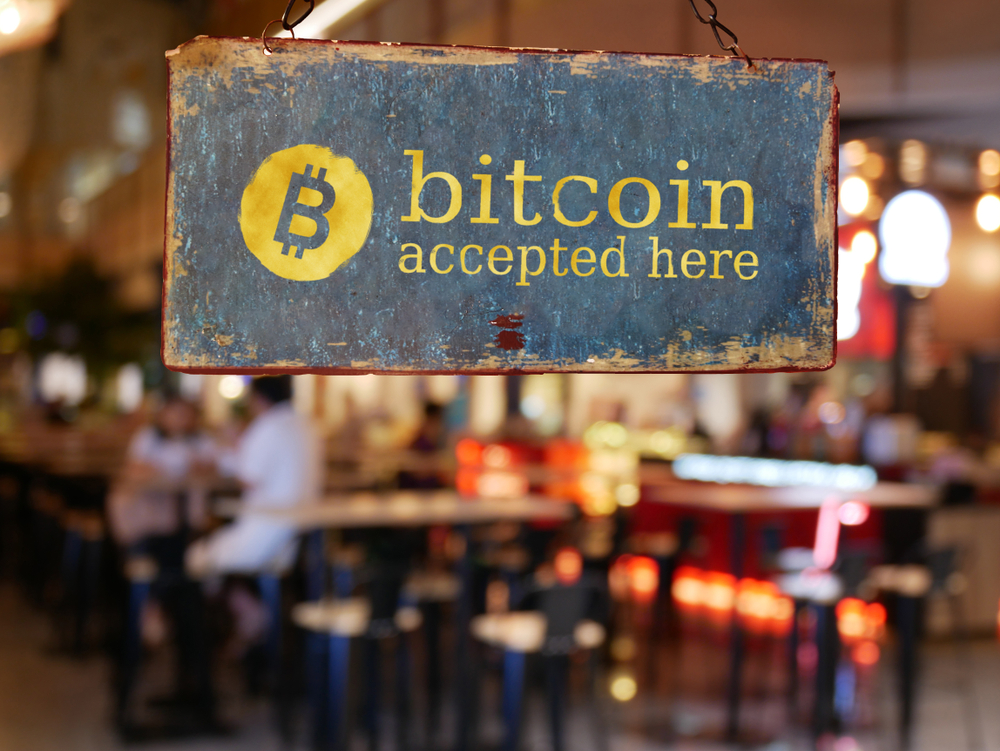
                    Are Merchants Allowed to Accept Bitcoin as a Means of Payment?

                    In the last couple of months, Bitcoin gained attention primarily as a very attractive investment opportunity. At this point in time, not only a few adventurous private investors, but also more and more institutional investors such as investment funds and investment banks invest in the best-known cryptocurrency. Even though Bitcoin is currently recognized as the hottest investment asset of the hour, the originally described and intended application for Bitcoin in Satoshi Nakamoto’s whitepaper was the creation of an alternative electronic means of payment that functions in a decentralized manner and does not require a central settling institution. This originally intended application has not been completely forgotten. Elon Musk for example announced that his company Tesla, which caused a stir by investing 1.5 billion dollars in Bitcoin earlier, intends to accept Bitcoin as a payment for Tesla automobiles in the future. But what legal obstacles do traders face, if they intend to accept Bitcoin or comparable cryptocurrencies as a means of payment for their goods and services?

                    PAYMENT WITH BITCOIN ONLY POSSIBLE IF MERCHANT AND CUSTOMER CONSENT

                    From a private law point of view, it first has to be noted that Bitcoin does not have the status of a legal tender in Germany. According to the German Central Bank Act, legal tender, which can always be used to settle financial obligations due to legal order, are exclusively coins and banknotes denominated in euros. The payment of goods and services with Bitcoin is nevertheless possible under German private law, if both parties of a contractual relationship agree that a Bitcoin payment shall have the effect of settling the payment obligation. On the other hand, a customer has no possibility to force a merchant to accept Bitcoin instead of euros as a payment. An effective payment in Bitcoin from a civil law point of view therefore requires that the merchant and his customer validly agree on the exchange of Bitcoins for goods contractually.

                    ACCEPTANCE OF BITCOIN AS A PAYMENT GENERALLY NOT SUBJECT TO AUTHORIZATION

                    Merchants offering their customers the option to pay in Bitcoin for their offered goods or services generally do not require a prior authorization from BaFin for this activity. The mere acceptance of Bitcoin as a means of payment is possible without an authorization because the acceptance of Bitcoin does not constitute a banking business or a financial service. However, according to the administrative practice of BaFin the acceptance of Bitcoins as a means of payment may be associated with activities that require prior authorization, if the merchant offers additional services to the customer which are considered as a banking business or a financial service pursuant to the German Banking Act.

                    SUBSEQUENT TRADING ACTIVITIES AS REGULATED PROPRIETARY TRADING

                    In case of accepting Bitcoin as a means of payment, merchants will regularly face the question of how to commercialize the received Bitcoins in order to turn them to their business account. In most cases, the employees of the merchant want to be paid in euros and not in Bitcoin. Additionally, facility rents and other operation expenses will usually only be payable in euros. This is obviously always the case for tax payments to the German tax authority. Bitcoin stocks will therefore have to be exchanged by merchants to euros on a regular basis. This activity under certain circumstances may constitute proprietary trading, which would be subject to a prior authorization requirement from BaFin. However, the obligation to obtain authorization will only be triggered if the volume of the trading activities reaches a significant volume and a regular frequency. An obligation to obtain authorization will therefore be avoidable in most cases with a diligent planning.

                    Attorney Lutz Auffenberg, LL.M. (London)

                    I.  https://fin-law.de

                    E. info@fin-law.de

                    OUR BLOG ARTICLES IN A MONTHLY NEWSLETTER?

                    The FIN LAW Newsletter provides you with all blog articles of the month via monthly e-mail. Our newsletter is published regularly at the beginning of every month. Feel free to sign in to the FIN LAW Newsletter by clicking the button below. Of course can can sign off at any time if you do not wish to receive our newsletter anymore.

                    subscribe to Newsletter

                      Contact

                      info@fin-law.de

                      Feb 15, 2021

                      Tokenization of Assets – How does that Legally Work?

                      With the rise of blockchain-based smart contracts, the subject of tokenization also gained in relevance. The decentralized issuance of tokens, which are transferable between users of a network without an intermediary enables the digitization of all kinds of objects from a technical point of view. Tokenization rapidly became a prominent topic in the field of capital markets. However, the possibilities of tokenization are not limited to the digital representation of financial instruments. Equally feasible and already realized in the past is the tokenization of real-world tangible assets, which enables the completely digital transfer of property of real-world objects and with that a proof of property for these objects. But what has to be observed from a legal point of view when it comes to projects dealing with tokenization and can an inextricable legal link between token and tokenized object be created?

                      LEGAL REQUIREMENTS DEPEND ON THE OBJECT TO BE TOKENIZED

                      A generally applicable blueprint for the legal implementation of tokenization projects does not exist, because the legal requirements of each individual project result from the specifics of the object that is intended to be tokenized. The regulatory characteristics of the specific object as well as the implementation specifics, resulting from the applicable private law must be observed. Should it be intended to tokenize e.g. medicals or special wastes, the regulatory requirements would differ from those that would be applicable to the tokenization of art objects or cars. Should it be physical objects that are intended to be tokenized, there is always the problem that it must be ensured that the connection between the object and the token that represents it, respectively the ownership of it, really is an inextricable link. Moreover, there is a legal difference between a physical object that is represented by a single, non-fungible token and a physical object that is represented by a number of fungible tokens. In the latter case, the tokens could merely represent a co-ownership, respectively fractions of the ownership instead of a full-fledged sole ownership of the object.

                      INEXTRICABLE LINK BETWEEN TOKEN AND OBJECT AS CENTRAL LEGAL CHALLENGE

                      The German private law only provides for the establishment or transfer of property in the legal sense on physical objects. For virtual objects such as business ideas or tokens it does not foresee the possibility of establishing property in the legal sense. Therefore, a mechanism must be developed that ensures that the bearer of a specific token is also the property-owner or co-property-owner of the tokenized object, which is represented by the token. In enclosed exchange relationships such as online platforms, there is e.g. the option to determine via terms and conditions that are mandatorily accepted by all platform users upon registration, that the transfer of a token to another platform user is simultaneously connected to an offer to reassign the (co)-property-ownership of the tokenized object to that user. The acceptance of the token – possibly after confirmation of an implemented acceptance-feature – would then also represent the acceptance of the offer to reassign (co)-property-ownership of the tokenized object. Outside of such enclosed platform solution, the attempt of a contractual transfer-of-ownership fiction will regularly fail, because the law allows for the transfer of the tokenized object via an agreement and the handover of the actual, physical object, meaning that a transfer of ownership of the object would still be possible without the transfer of the connected token. In such case, the bearer of the token would not be the owner of the object. The two legal constructs would be separated with the result that the tokenization of the object would end.

                      Attorney Lutz Auffenberg, LL.M. (London)

                      I.  https://fin-law.de

                      E. info@fin-law.de

                      OUR BLOG ARTICLES IN A MONTHLY NEWSLETTER?

                      The FIN LAW Newsletter provides you with all blog articles of the month via monthly e-mail. Our newsletter is published regularly at the beginning of every month. Feel free to sign in to the FIN LAW Newsletter by clicking the button below. Of course can can sign off at any time if you do not wish to receive our newsletter anymore.

                      subscribe to Newsletter

                        Contact

                        info@fin-law.de

                        Feb 08, 2021

                        DeFi on the Rise – Final Destination for Financial Market Regulation?

                        For several month now, projects that provide applications within the decentralized financial markets continue to gain in significance. The buzzword Decentralized Finance or its abbreviation DeFi relates to smart contract applications (DApps), which enable users to conduct business on the financial markets without the need of a central service provider. The most prominent examples are decentralized exchanges (DEX), which enable users to exchange crypto assets into other crypto assets without the necessity of a centralized platform operator, but instead via the usage of an automated functioning smart contract embedded in a blockchain infrastructure. According to German regulatory banking law, the operation of an exchange for crypto assets is an activity which in most cases is subject to prior authorization and ongoing supervision from BaFin respectively by BaFin and the German Federal Bank. Where an exchange lacks an operator, the question of how the financial market regulation can be applicable to such exchange arises.

                        DEX AS MULTILATERAL TRADING FACILITY WITHOUT OPERATOR

                        The operation of an exchange for crypto assets may fulfill various different banking activities and financial services that are regulated by the German regulatory banking law and that are therefore subsequently subject to authorization. It is conceivable that the operation of an exchange is conducted by way of investment brokerage, proprietary trading, financial commission business or in the form of a multilateral trading facility. In order to trigger an authorization obligation pursuant to the German Banking Act (KWG) with a subsequent institutional supervision, the activity has to be conducted by an operator who can be the addressee of the supervisory obligations, even more so because the KWG only imposes authorization obligations on “someone” (wording of the KWG: “who”), that conducts banking activities or provides financial services on a commercial scale in Germany. It is therefore conceivable that a decentralized exchange, which conducts exchange orders of its customers related to crypto assets in an automated way may qualify as a multilateral trading facility in the sense of the KWG, but due to the lack of an operator an authorization obligation is not triggered anyways.

                        SPECIFIC CONTRIBUTION OF THE INITIATORS IS THE DECISIVE FACTOR FOR AUTHORIZATION OBLIGATIONS

                        The lack of an operator in the traditional sense for DeFi projects is not necessarily a self-evident fact that can be assumed without any further examination of the concrete project and its history. It is also possible, that a certain contribution of an initiator or an involved party aiming at the implementation of a DeFi project can be qualified as the operation of the project in the sense of the KWG. This of course would trigger the aforementioned authorization obligations for the initiator or involved party. This could for example be the case for projects that do not completely operate in a decentralized manner, but instead have a central instance in the background which has administrative rights for the underlying smart contract and therefore reserves the right to influence the settlement of transactions. The scope of these administrative rights in the specific case determines, if the initiators or involved parties can be qualified as operators in a regulatory sense. Moreover, the obligation to obtain authorization in accordance to the KWG would also require the operator to conduct the operation on a commercial scale and furthermore, the operation itself would have to specifically relate to the Federal Republic of Germany.

                        NEW REGULATION FOR DEFI IS NECESSARY

                        The current financial market regulation is hardly suitable for the regulation of DeFi projects without an operator. DeFi systems are often out of the reach of the competent authorities when it comes to supervision and therefore also with regards to the fulfillment of financial markets supervisory compliance obligations. The complete lack of regulation in this area poses a significant threat to the stability and integrity of the financial markets as well as for investors. Incorrect code may lead to irreversible damages for users as well as for the markets. Money laundering prevention can also not be conducted without a central operator being obligated to conduct audit, documentation and notofocation measures. Without an operator, the fulfillment of general requirements for institutions regarding subjects such as a suitable and effective risk-management or an adequate IT-security cannot be ensured. The creation of an effective and reasonable regulatory regime for DeFi projects should be addressed as soon as possible. In order to avoid national solo efforts, it would be helpful if the subject would be included in the upcoming Markets in Crypto Assets regulation (MiCA) by the European Commission.

                        Attorney Lutz Auffenberg, LL.M. (London)

                        I.  https://fin-law.de

                        E. info@fin-law.de

                        OUR BLOG ARTICLES IN A MONTHLY NEWSLETTER?

                        The FIN LAW Newsletter provides you with all blog articles of the month via monthly e-mail. Our newsletter is published regularly at the beginning of every month. Feel free to sign in to the FIN LAW Newsletter by clicking the button below. Of course can can sign off at any time if you do not wish to receive our newsletter anymore.

                        subscribe to Newsletter

                          Contact

                          info@fin-law.de

                          to top