-
 New Implementation Guidance from BaFin on the Simplified ICT Risk Management Framework
DORA implementation: BaFin specifies requirements for simplified ICT risk management framework: BaFin provides financial companies with an overview of documentation, security measures, and processes for the simplified ICT framework, but emphasizes that the content must be tailored to each individual case in accordance with the principle of proportionality.
-
 Will Supervisory Authorities Use AI Tools in Money Laundering Supervision?
Opportunities and challenges: How is SupTech changing the fight against financial crime, and why are FinTech companies increasingly under scrutiny from regulators?
-
 Are Stablecoins Suitable as a Means of Payment in Limited Networks?
Stablecoins are the talk of the town. They are undoubtedly crypto assets and regulated under MiCAR. But can they also be considered monetary amounts under the ZAG in individual cases? If so, could the exception for limited networks apply to services relating to them in this case?
-
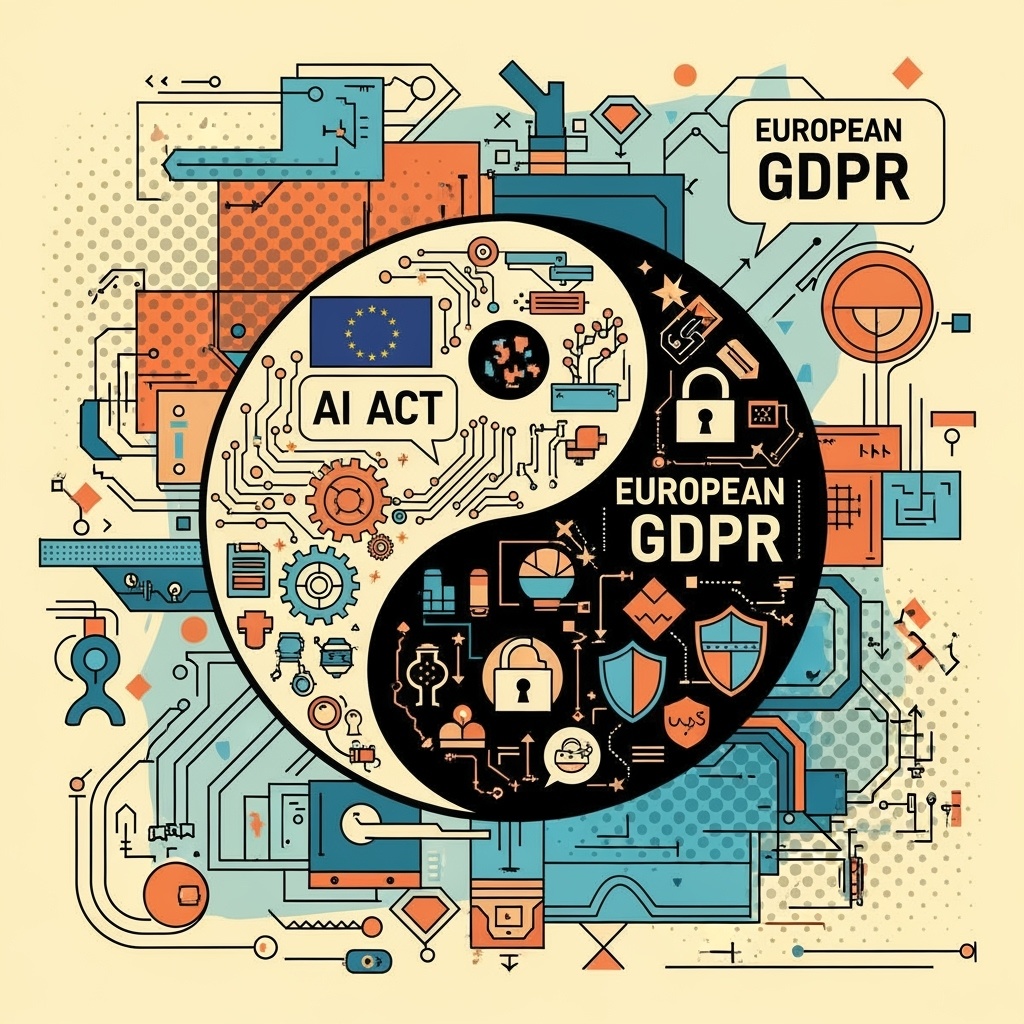 AI Compliance in Companies (Part III) – Scope of the GDPR and AI Act?
One AI system, two sets of rules: The compliance requirements of the GDPR and the AI Act overlap, but they are not identical. What are the differences and similarities?
-
 The Crypto Custody Agreement According to MiCAR – What Must Crypto Custodians Mandatorily Agree Upon With Their Customers?
Crypto custodians must comply with comprehensive compliance obligations under MiCAR regulations. This includes entering into crypto custody agreements with custody clients that contain the minimum content specified in MiCAR. But what exactly must such custody agreements cover?
-
 Token Sale to Private Purchasers – Can the Issuer Freely Choose the Applicable Law for the Token Terms?
In the context of public offerings of token sales designed in accordance with MiCAR, all purchasers should have the same rights. In the case of private investors, however, consumer protection may vary in individual cases due to the Rome-I-Regulation. Is the corrective measure of the Rome-I-Regulation for public offerings of financial instruments also applicable to token sales?
-
 AI Compliance in Companies (Part II) – When Does an AI Model Fall Within the Scope of the GDPR?
AI compliance in companies: When are AI models subject to the GDPR, and what challenges arise when complying with data protection regulations?
-
 Descoping MiCAR – Are NFTs the Last Stronghold of the Unregulated Crypto Market?
NFTs fall outside the scope of MiCAR, thus offering plenty of scope for innovative business models. But what specific use cases does the technology offer besides tokenized image usage rights, and when is an NFT actually unregulated?
-
 Descoping MiCAR – When Does the Scope Exemption for Financial Instruments Apply?
MiCAR is not supposed to apply to tokens that can be classified as financial instruments within the meaning of MiFID regulation. But to which crypto assets does this exemption apply exactly? ESMA has commented on this. The principle of “in dubio pro MiFID2” applies.
-
 AI Compliance in Companies (Part I) – Why and How Should Employees Be Trained?
From hype to obligation: To implement successful AI projects, companies must train their employees in the use of AI systems – but how can a company ensure that its employees have the necessary AI literacy?
-
 The Future of Programming: Vibecoding with Artificial Intelligence
Faster code thanks to AI, but on unstable legal ground? How legal risks and security gaps can be mitigated.
-
 MiCAR Transition – What are BaFin’s Obligations towards CASPs under MiCAR Grandfathering?
Grandfathering is not entirely uniform in MiCAR, but leaves member states leeway in determining the maximum duration of transition periods. EU member states have made extensive use of this, which can cause problems for CASPs operating across the EU.