
Both copy trading and algorithmic trading software have become indispensable in today’s financial world. In copy trading, investors manually or automatically replicate the trading decisions of another trader. With algorithmic trading software, on the other hand, a program is linked to the user’s account with a broker or trading platform. The software analyzes market data and implements automated trading strategies according to its programming. By their very nature, both models can also result in significant investment losses. It is not always immediately clear who is liable for such losses. In principle, it is conceivable that signal providers may be held responsible, particularly for providing false information regarding returns, trading strategies, or risks. However, the platforms that enable copy trading may also be liable if they violate their own obligations to provide information or ensure protection. For software providers, on the other hand, the focus is on programming errors, faulty order transmissions, and insufficient information about how the software works. Brokers may also be liable in cases of faulty order execution. On the other hand, however, the investor’s own responsibility must also be taken into account, for example, when selecting a trading strategy or setting risk parameters. Under German law, a claim for damages can only be considered if the statutory requirements for such a claim are met. Therefore, in order to claim compensation for damages incurred, there must typically be not only actual damages but also a legal relationship—such as a contract—a breach of duty, and fault. Furthermore, these elements must be causally linked to one another; for example, the breach of duty must have led to the damage. The mere occurrence of trading losses therefore does not in itself give rise to a claim for liability.
What Regulatory Requirements Apply to Copy Trading and Algorithmic Trading Software?
In addition to the potential risk of civil liability, providers must also determine whether their activities constitute an investment service requiring authorization. The decisive factor in this regard is not the name of the business model, but its actual structure. In the case of copy trading, the key question is whether the activities in question constitute investment advice or financial portfolio management—both of which require authorization. While investment advice, by definition, requires the provision of personalized recommendations regarding specific financial instruments, financial portfolio management may apply, for example, when a provider independently makes investment decisions for clients within a granted scope of discretion. This can be particularly relevant in cases where third-party trading decisions are automatically replicated. In the case of algorithmic trading software, a distinction must be made between situations where only the technical infrastructure is provided and those where the software independently makes investment decisions and submits orders. Depending on the specific structure, activities requiring authorization—such as investment advice, financial portfolio management, or investment brokerage—may be involved. Even general trading signals and investment strategy recommendations may trigger regulatory requirements and, in any case, a reporting obligation under the Securities Trading Act (WpHG). In addition, the specific requirements of the WpHG regarding algorithmic trading may also apply here. However, these do not apply to every software provider, but only when the statutory conditions are met.
How Can Liability and Regulatory Risks Be Avoided?
For providers of copy-trading platforms and algorithmic trading software, an early legal review of their business model is therefore crucial for minimizing risks. In particular, it must be clarified what decision-making authority the provider assumes within the framework of the specific business model, and whether this constitutes the provision of an investment service requiring authorization. Once this has been clarified, structuring the business model can, in many cases, enable the services offered to be provided without a license. In addition, the contractual relationships between investors, signal providers, software providers, and brokers should be clearly defined. Transparent information about trading strategies, technical operations, and loss risks can help reduce liability risks. Terms and conditions tailored to the specific service and compliant with the law also help providers minimize their liability risks. In the case of automated trading systems, appropriate technical controls are also necessary to prevent erroneous orders. Copy trading and algorithmic trading software thus raise complex civil and regulatory issues. Providers should therefore have both potential liability risks and the regulatory classification of their business models reviewed at an early stage.
subscribe to NewsletterAbout the author
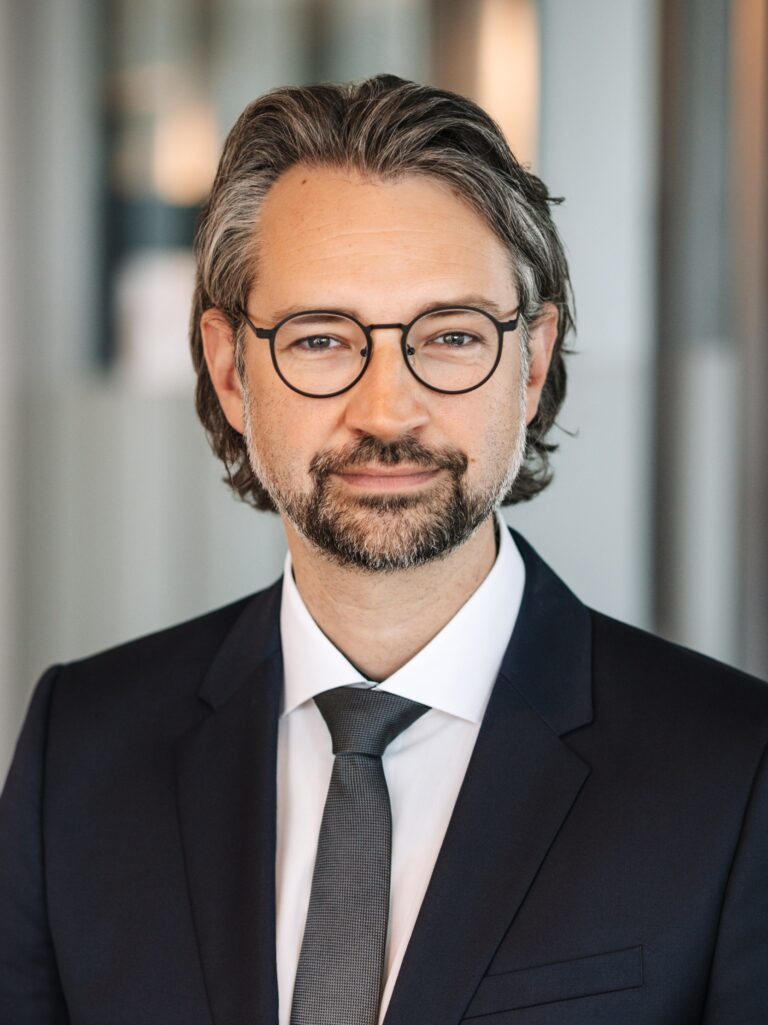
Dr. Lutz Auffenberg, LL.M. (London)
Attorney, Partner at FIN LAW
Specialist Attorney in Banking and Capital Markets Law
For more than 10 years, Dr. Lutz Auffenberg has advised companies, financial service providers and providers of innovative business models on financial supervisory law, payment services supervisory law, capital markets law and the regulatory requirements for digital financial products.
Areas of practice
- Financial supervisory law and BaFin proceedings
- Capital markets, FinTech and crypto regulation
- Payment services supervisory law
-
 FIN LAW – Awarded by WiWo for the Third Time
For the third time, WirtschaftsWoche (WiWO) magazine has awarded FIN LAW and Dr. Lutz Auffenberg, LL.M. (London) as a top Law Firm and Lawyer respectively.
-
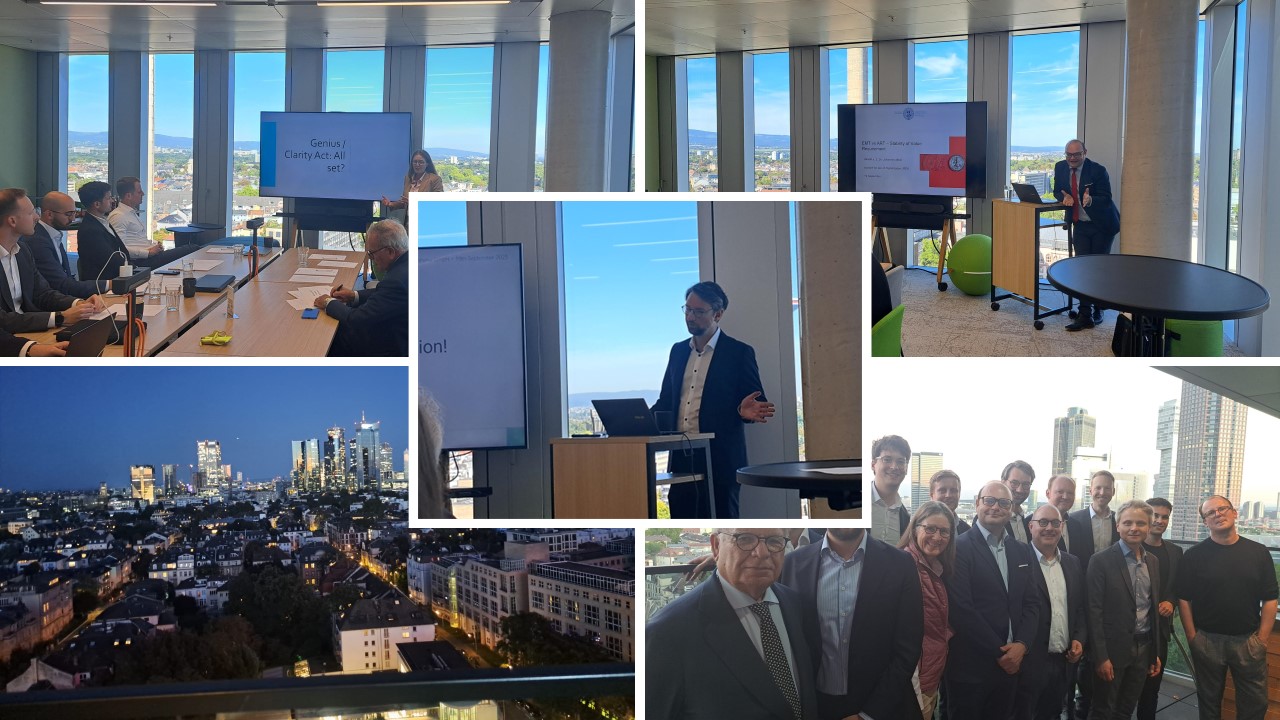 FIN LAW Hosts the Annual Meeting of the Fintech Legal Network
FIN LAW had the pleasure of hosting the Annual Meeting of the Fintech Legal Network and was pleased to welcome members to its offices in Senckenberganlage.
-
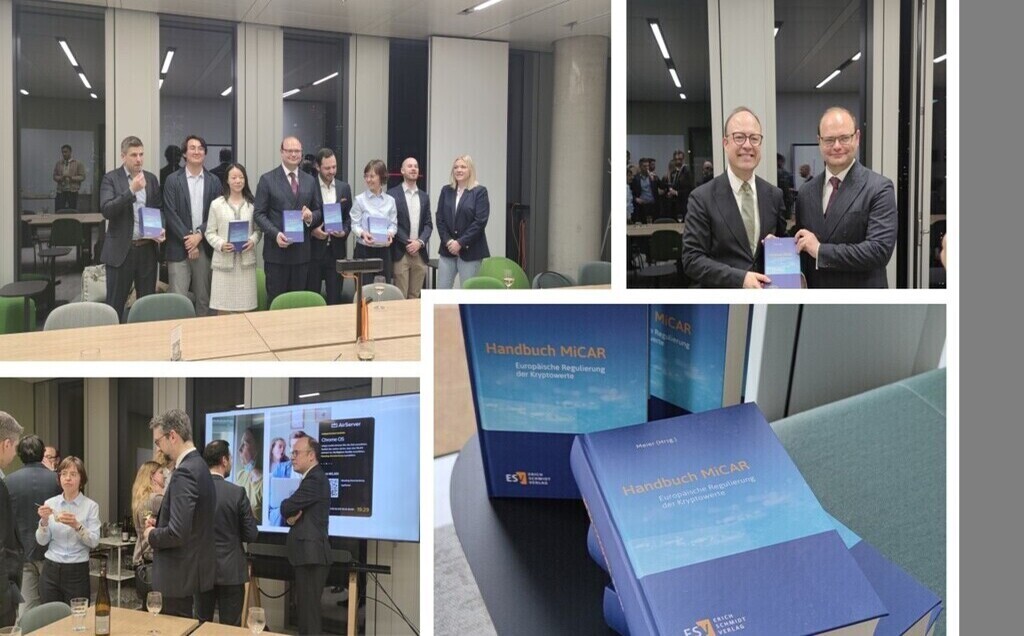 Successful Book Launch at FIN LAW for the New MiCAR Handbook by Dr. Johannes Meier
Presentation of the new MiCAR handbook by Dr. Johannes Meier at the book launch event of FIN LAW.