
The EU Regulation on Markets in Crypto-Assets (MiCAR) was only adopted in May 2023, and its provisions have been fully in effect only since the beginning of 2025. Nevertheless, European regulators are already considering changes and expansions to the regulatory framework for crypto-assets in Europe. From May 20, 2026, through the end of September 2026, market participants were able to take part in a public consultation conducted by the European Commission and share their views on the currently applicable MiCAR rules and any need for changes to the regulation. In addition to examining the current MiCAR regulations, the consultation also focused on the question of to what extent MiCAR should cover the topic of Decentralized Finance (DeFi) in the future. Under the current legal framework, MiCAR regulates exclusively the centralized crypto market of centrally operating crypto-asset service providers (CASPs) and issuers of crypto-assets. Fully decentralized protocols that operate without an operator subject to regulatory oversight remain unregulated to date, as the regulator explicitly clarified in Recital 22 of MiCAR. The recital further states that crypto-asset services should not fall within the scope of MiCAR if they are provided in an exclusively decentralized manner without an intermediary. Whether this objective will still hold true in the future is, at the very least, highly doubtful, particularly following the submission of opinions by the European Central Bank (ECB) and the European Securities and Markets Authority (ESMA).
ESMA and the ECB Advocate for the Inclusion of DeFi in MiCAR
The European Commission’s own consultation paper specifically asks participants whether DeFi protocols should be included in the MiCAR regulation, in order to assess the extent to which new rules for transactions involving DeFi protocols should be introduced. In its opinion, ESMA points out that there are sometimes differing views within the EU regarding when exactly a service is fully decentralized within the meaning of Recital 22 of MiCAR. This legal uncertainty leads to “decentralization washing,” by which it means that providers of activities that are actually regulated as crypto-asset services attempt to obscure their liability by portraying the service as decentralized. Furthermore, the exclusion of DeFi from MiCAR creates scope for regulatory arbitrage when providers of purported DeFi services establish themselves in a Member State where the competent supervisory authority imposes less stringent requirements for demonstrating decentralization. ESMA therefore proposes amending MiCAR to clarify exactly when full decentralization is deemed to exist. In addition, it suggests introducing a new crypto-asset service that would subject interaction with DeFi protocols to authorization and supervision by the competent authorities. The ECB takes a similar stance in its opinion and suggests that, at the very least, access points to DeFi protocols should be regulated. It argues that, for example, in the case of access to DeFi protocols through regulated CASPs, only certain (qualified) investor groups should be offered such access.
Regulatory Proposals Remain True to the Centralized Approach
It is apparent that the European Commission, ESMA, and the ECB all intend to place greater regulatory focus on decentralized services and the DeFi sector as a whole. However, the proposed measures will not alter the fundamental approach of excluding services provided purely in a decentralized manner via smart contract-based DeFi protocols. The MiCAR regulations systematically require a centrally acting responsible party to be the addressee of supervisory obligations. In this respect, even if the current proposals were implemented, interaction with DeFi protocols would remain possible from a supervisory perspective for users acting on their own responsibility. The regulation of so-called “gatekeepers,” who, as regulated CASPs, provide their customers with access to services operating via DeFi protocols, would not only bring DeFi protocols closer to the supervised financial markets but could also help close existing regulatory gaps regarding access to DeFi, which currently, in some cases, prevent interaction with such DeFi services within the regulated environment. Such issues still exist today, particularly in the area of anti-money laundering, for example regarding the question of how the obligation to identify and verify the counterparty can be implemented in the context of interactions with DeFi protocols.
Attorney Dr. Lutz Auffenberg, LL.M. (London)
subscribe to Newsletter-
 FIN LAW – Awarded by WiWo for the Third Time
For the third time, WirtschaftsWoche (WiWO) magazine has awarded FIN LAW and Dr. Lutz Auffenberg, LL.M. (London) as a top Law Firm and Lawyer respectively.
-
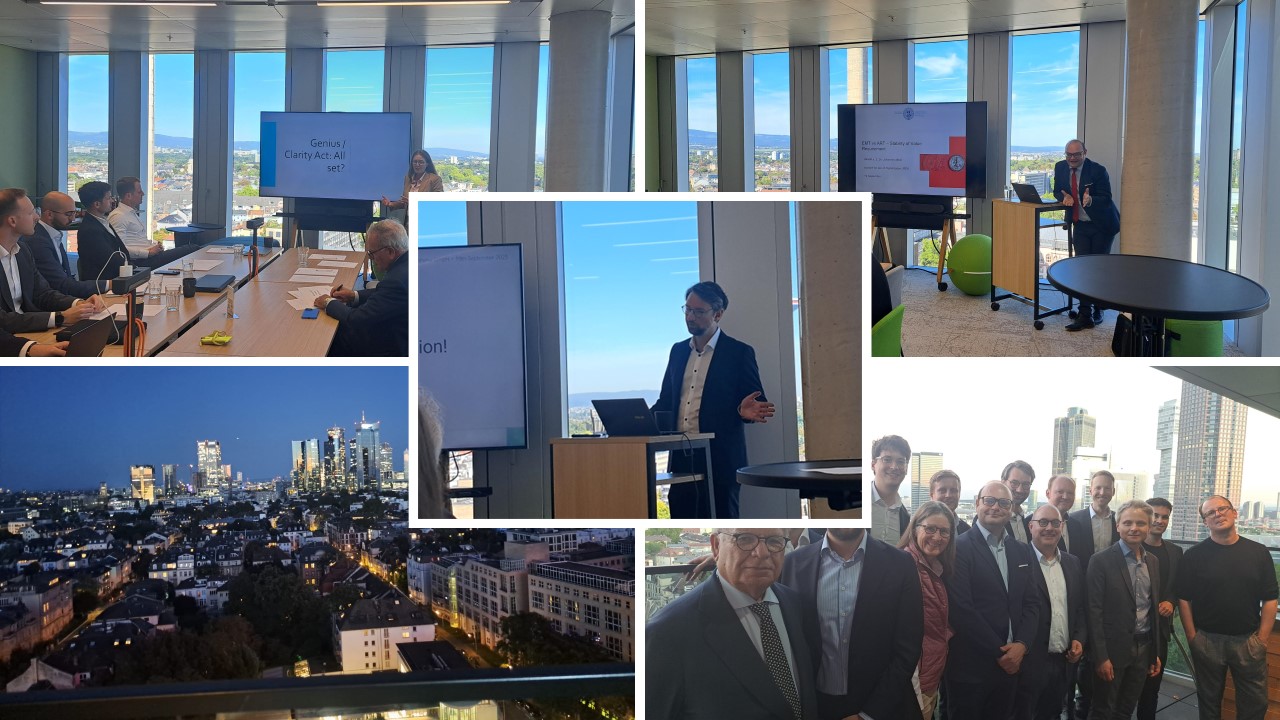 FIN LAW Hosts the Annual Meeting of the Fintech Legal Network
FIN LAW had the pleasure of hosting the Annual Meeting of the Fintech Legal Network and was pleased to welcome members to its offices in Senckenberganlage.
-
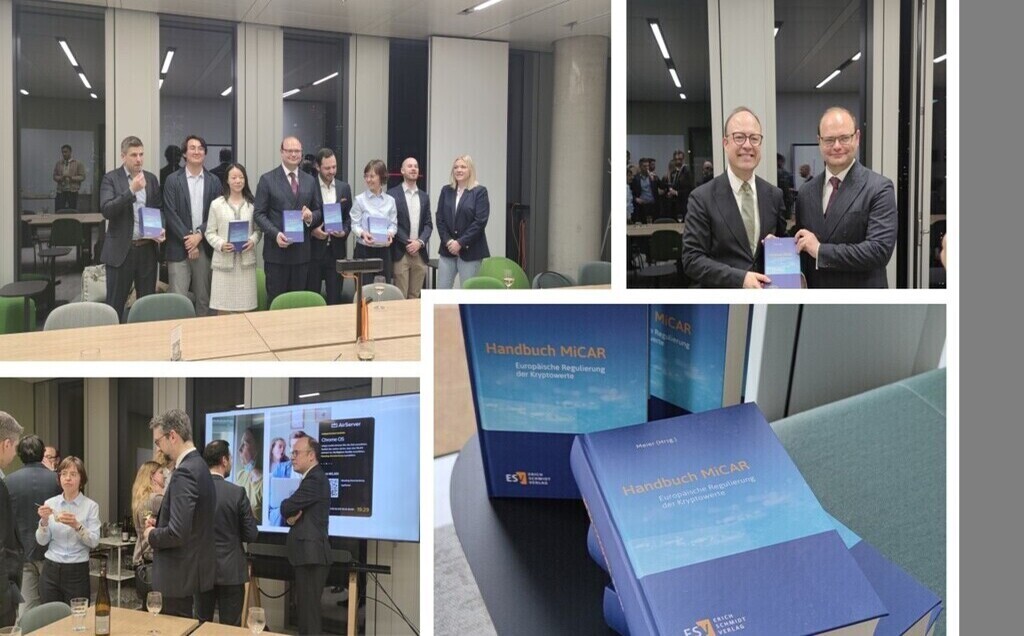 Successful Book Launch at FIN LAW for the New MiCAR Handbook by Dr. Johannes Meier
Presentation of the new MiCAR handbook by Dr. Johannes Meier at the book launch event of FIN LAW.