
The supervision of crypto service providers (CASP) has become a day-to-day issue for financial supervisory authorities in European member states over the last few years, and especially since MiCAR came into force. Hardly any self-respecting institution can avoid the question of whether its own business areas should be expanded to include crypto assets or whether blockchain technology could be used to improve the technical efficiency of existing business models. The German BaFin, in particular, which was already required to supervise crypto-related business models under national law before MiCAR came into force, has built up considerable expertise in this area in relation to the functioning of crypto assets and the markets in which they are traded. However, the EU Commission is considering withdrawing the supervisory mandate for providers of crypto-asset services from BaFin and, in general, all national financial supervisory authorities in the future and having supervision carried out directly by ESMA, based in Paris. ESMA would then be directly responsible for license applications from crypto asset service providers in accordance with Art. 62 MiCAR. After successfully completing the MiCAR licensing process, ESMA would also take over the ongoing supervision of CASPs from the national supervisory authorities.
ESMA’s Jurisdiction Would Apply to All Pure CASPs – Distinction for Entities Notified Under Article 60 MiCAR
According to the current draft of the EU Commission for the planned amendments to MiCAR, ESMA would be the competent authority for all companies that have applied for or received authorization under Article 62 MiCAR. With regard to credit institutions, investment firms, or other companies supervised under other regimes that are authorized to offer crypto asset services in addition to their traditional business after successfully completing a notification procedure in accordance with Article 60 MiCAR, the current jurisdiction of BaFin and the Deutsche Bundesbank would remain in place for the time being. However, under the current draft regulation, such companies would have to submit information on their total annual turnover to ESMA on an annual basis, specifying the percentage of turnover attributable to crypto-asset services. As soon as crypto asset services became the company’s main business according to these figures, the supervisory mandate with regard to the supervision of obligations under MiCAR would be transferred from the nationally competent authority to ESMA. The last available annual financial statements approved by the management body of the notified company would be decisive in each case.
EU Passporting for CASPs to be Integrated Directly into Authorization
Another change planned by the EU Commission concerns the MiCAR passporting regime. In future, crypto-asset service providers will be allowed to provide the crypto-asset services for which they are authorized by ESMA throughout the European Union. This approach seems sensible and understandable, especially since ESMA would be responsible for supervising all crypto-related business anyway. However, it remains to be seen whether the planned changes would actually lead to simplifications. It seems questionable whether the supervision of small and medium-sized CASPs by the Paris-based ESMA in particular can prove to be practicable. Correspondence and supervisory discussions would probably take place largely in English, which could cause difficulties for smaller CASPs. With regard to investor protection, internationalization could also create hurdles for customers of supervised CASPs if they have to turn to an international institution with their concerns instead of being able to contact German-speaking representatives at BaFin and the Bundesbank. One positive effect would certainly be that the already very granular interpretation of MiCAR by ESMA would be further harmonized and differences in the supervisory rigor of national supervisory authorities could be counteracted. However, it remains to be seen whether the EU Commission’s proposals will actually be implemented in this form, as the consultation period for comments from market participants and associations on the proposed amendments has only recently expired and the evaluation of the comments received is still pending. In addition, the proposals would still have to go through the entire EU legislative process, which is rarely, if ever, completed without significant changes.
Attorney Dr. Lutz Auffenberg, LL.M. (London)
subscribe to Newsletter-
 FIN LAW – Awarded by WiWo for the Third Time
For the third time, WirtschaftsWoche (WiWO) magazine has awarded FIN LAW and Dr. Lutz Auffenberg, LL.M. (London) as a top Law Firm and Lawyer respectively.
FIN LAW – Awarded by WiWo for the Third Time
For the third time, WirtschaftsWoche (WiWO) magazine has awarded FIN LAW and Dr. Lutz Auffenberg, LL.M. (London) as a top Law Firm and Lawyer respectively. -
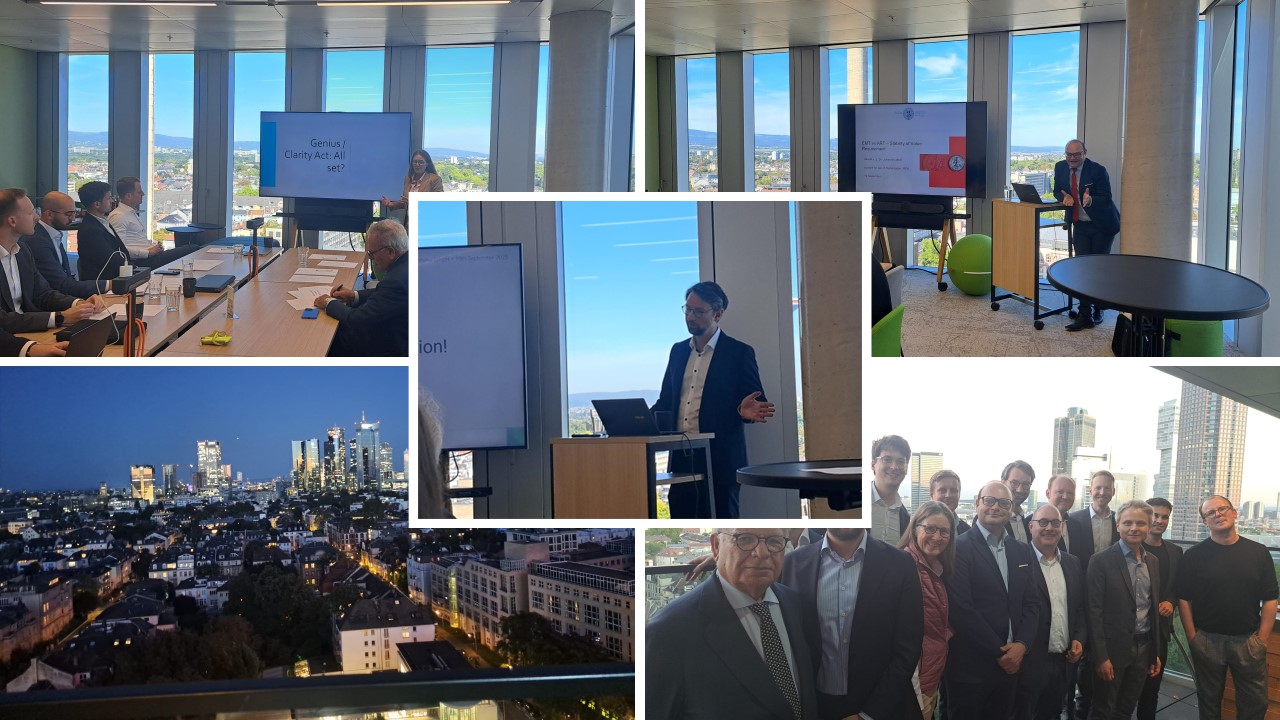 FIN LAW Hosts the Annual Meeting of the Fintech Legal Network
FIN LAW had the pleasure of hosting the Annual Meeting of the Fintech Legal Network and was pleased to welcome members to its offices in Senckenberganlage.
FIN LAW Hosts the Annual Meeting of the Fintech Legal Network
FIN LAW had the pleasure of hosting the Annual Meeting of the Fintech Legal Network and was pleased to welcome members to its offices in Senckenberganlage. -
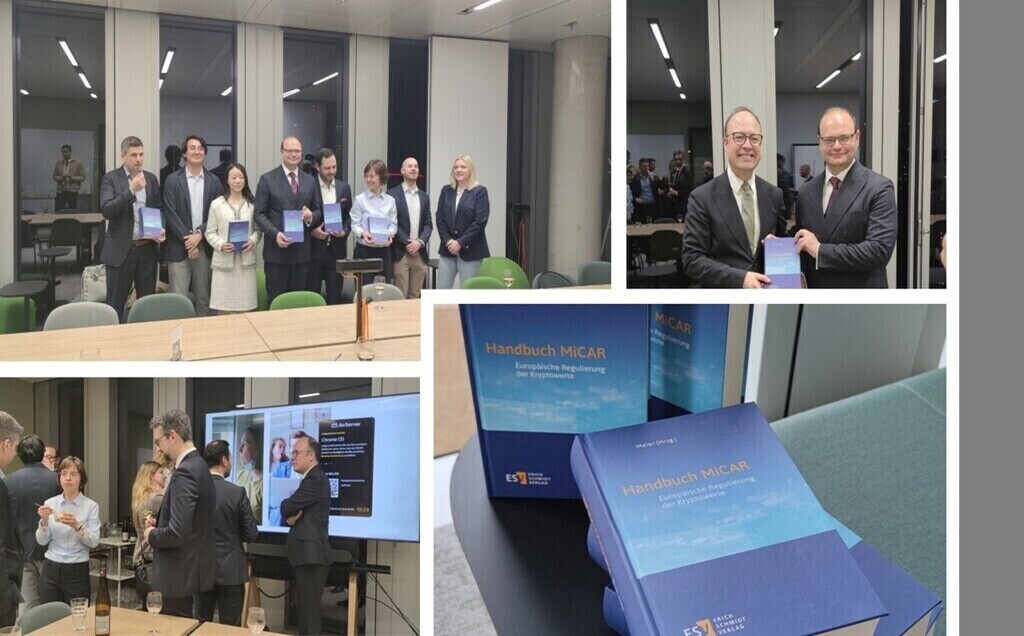 Successful Book Launch at FIN LAW for the New MiCAR Handbook by Dr. Johannes Meier
Presentation of the new MiCAR handbook by Dr. Johannes Meier at the book launch event of FIN LAW.
Successful Book Launch at FIN LAW for the New MiCAR Handbook by Dr. Johannes Meier
Presentation of the new MiCAR handbook by Dr. Johannes Meier at the book launch event of FIN LAW.