
Anyone seeking to offer crypto assets to the public in the European Union must first prepare and publish a crypto asset white paper in accordance with MiCAR regulations. The document must provide detailed information about the token offering. Specifically, Article 6(1) of MiCAR requires that the document include, in particular, information about the provider or—if different—the issuer of the crypto assets, the project behind the crypto assets, the details of the public offering, the rights and obligations associated with the tokens, as well as the risks, technical functioning, and potential adverse effects on the climate or the environment must be presented in the crypto asset white paper. Particularly attractive to initiators of crypto projects is the fact that MiCAR does not require approval of the crypto asset white paper by the competent supervisory authority, which in Germany is BaFin. Under Art. 8(1) MiCAR, the only requirement is that the offeror or issuer submit the final crypto asset white paper to the competent authority. Art. 8(3) MiCAR clarifies in this context that the supervisory authority may not require approval of the document prior to publication. The submission must take place 20 business days prior to the date of publication of the white paper.
What Specifically is BaFin’s Role in Relation to Crypto Asset Whitepapers?
At first glance, BaFin’s role regarding crypto asset white papers under MiCAR appears straightforward. BaFin is merely required to forward the crypto asset white paper submitted by the issuer to ESMA within five business days, after which ESMA makes it available in its crypto vasset white paper registry starting on the date the public offering begins. The submission to ESMA must take place within five business days of receiving the white paper. In addition, BaFin is tasked with forwarding, also within five days, the list of Member States—to be provided by the issuer—in which the public offering of the crypto assets is to take place, to the central contact point of the host Member States. In addition to the crypto asset whitepaper, BaFin, as the competent authority of ESMA, must also submit the explanation regarding the legal nature of the crypto assets to be offered, which must be drafted by the issuer and must explain why the crypto asset does not qualify as an e-money token (EMT) or an asset-referenced token (ART). However, Article 8 of MiCAR does not explicitly grant any substantive review authority in any form. Nevertheless, Article 94(1) of MiCAR sets forth certain powers vested in the competent authorities, and thus also in BaFin. The German legislature has specified these powers in Section 16 of the Crypto Markets Supervision Act (KMAG).
What Regulatory Instruments Does BaFin Have at Its Disposal Regarding Crypto Assets White Papers?
Art. 94(i) of MiCAR stipulates that competent authorities must have the power to require the persons responsible for a crypto white paper to amend or supplement the document if it does not contain the content required under MiCAR. BaFin may also require amendments to the white paper if this is required for reasons of financial stability or the protection of crypto asset owners. Furthermore, as the competent authority, BaFin has the option to suspend the public offering of crypto assets for up to 30 business days if there is suspicion that provisions of MiCAR have been violated. BaFin’s most stringent supervisory measure is the ability to prohibit a public offering of crypto assets if violations of MiCAR have been identified or if there is a sufficiently well-founded suspicion that such a violation will occur. In accordance with general principles of administrative law, BaFin must always act proportionately when exercising these powers. The German legislature has implemented the suspension and prohibition of public offerings of crypto assets in Section 15 of the KMAG. The authority to require changes to the crypto asset white paper was granted to BaFin under Section 16 of the KMAG.
Attorney Dr. Lutz Auffenberg, LL.M. (London)
subscribe to Newsletter-
 FIN LAW – Awarded by WiWo for the Third Time
For the third time, WirtschaftsWoche (WiWO) magazine has awarded FIN LAW and Dr. Lutz Auffenberg, LL.M. (London) as a top Law Firm and Lawyer respectively.
FIN LAW – Awarded by WiWo for the Third Time
For the third time, WirtschaftsWoche (WiWO) magazine has awarded FIN LAW and Dr. Lutz Auffenberg, LL.M. (London) as a top Law Firm and Lawyer respectively. -
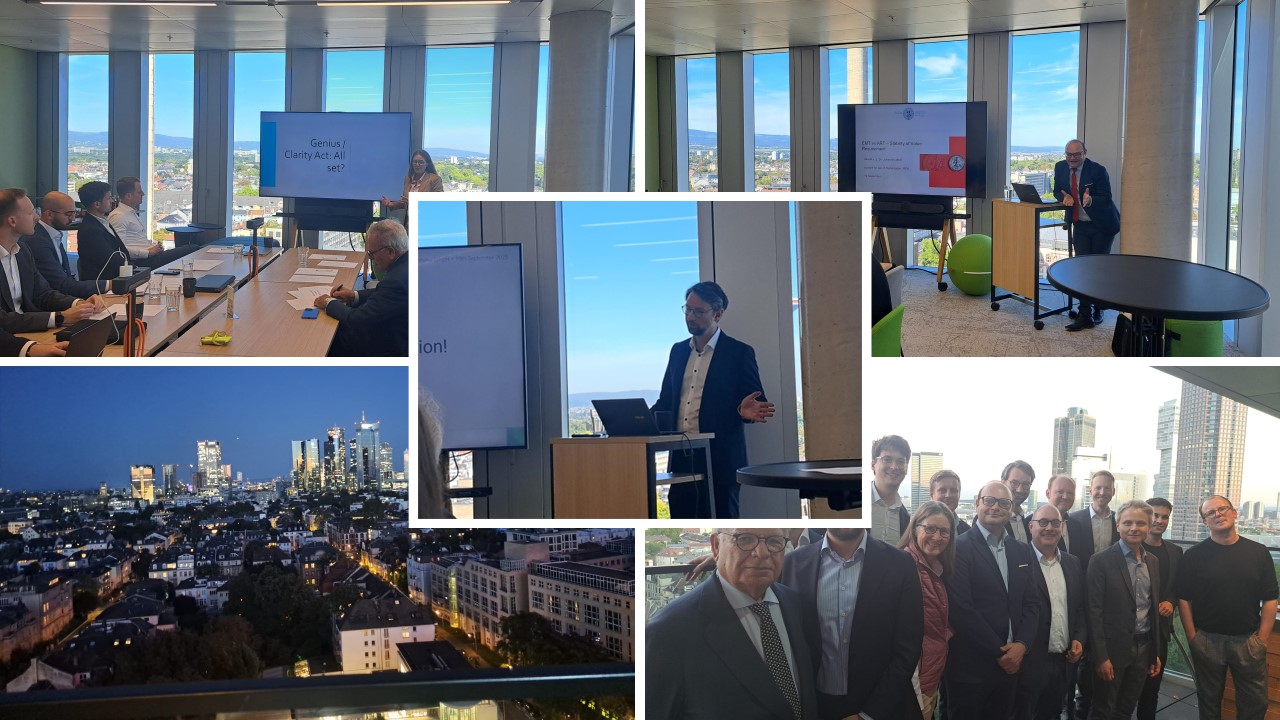 FIN LAW Hosts the Annual Meeting of the Fintech Legal Network
FIN LAW had the pleasure of hosting the Annual Meeting of the Fintech Legal Network and was pleased to welcome members to its offices in Senckenberganlage.
FIN LAW Hosts the Annual Meeting of the Fintech Legal Network
FIN LAW had the pleasure of hosting the Annual Meeting of the Fintech Legal Network and was pleased to welcome members to its offices in Senckenberganlage. -
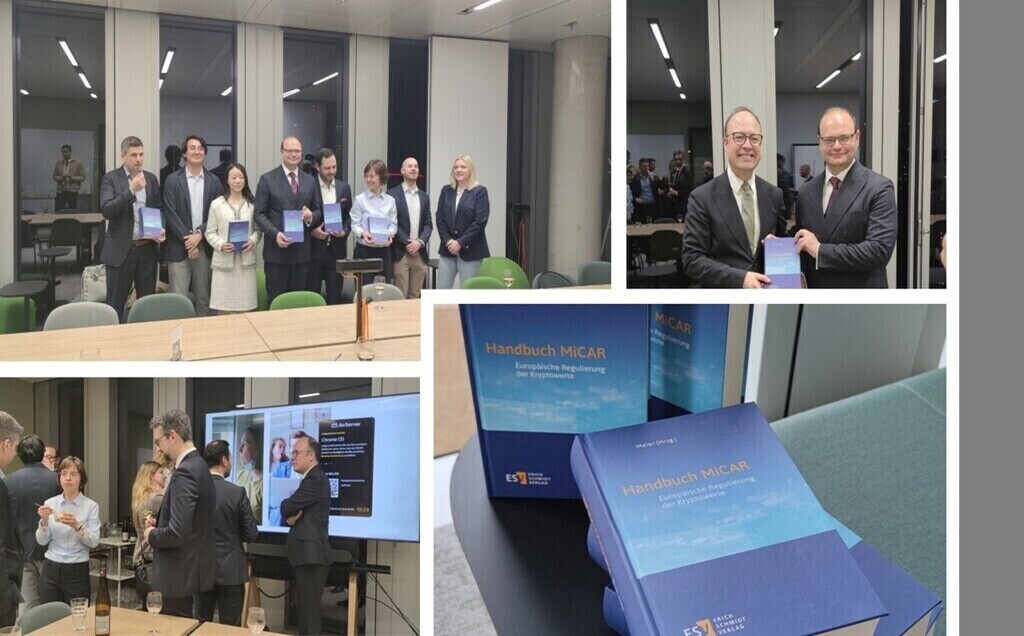 Successful Book Launch at FIN LAW for the New MiCAR Handbook by Dr. Johannes Meier
Presentation of the new MiCAR handbook by Dr. Johannes Meier at the book launch event of FIN LAW.
Successful Book Launch at FIN LAW for the New MiCAR Handbook by Dr. Johannes Meier
Presentation of the new MiCAR handbook by Dr. Johannes Meier at the book launch event of FIN LAW.