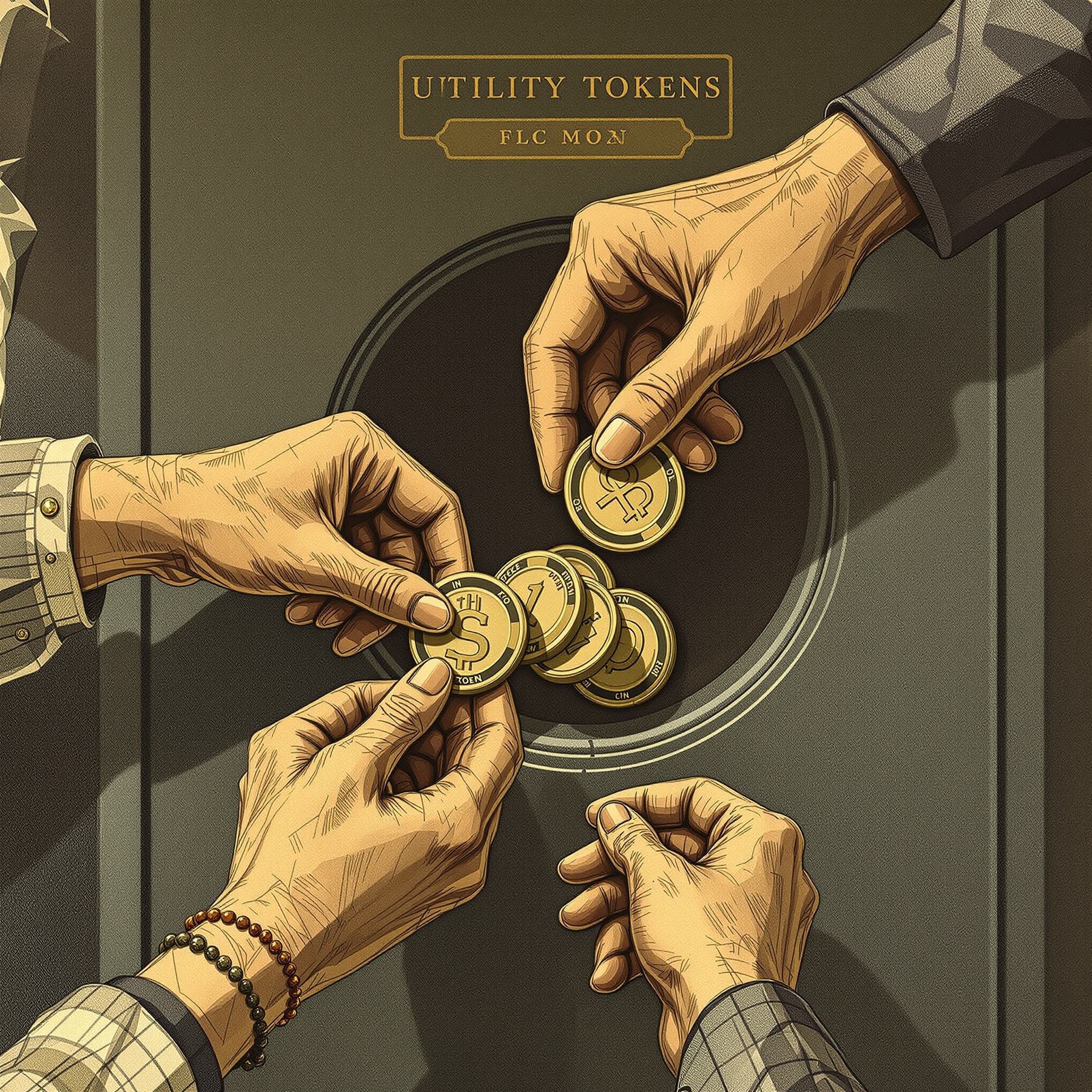
Since the launch of Ethereum in 2015 and the associated emergence of the smart contract economy, issuing proprietary tokens has become an interesting alternative to corporate financing, especially for startups and tech companies. In the past, issuers of crypto tokens generally attempted to design their tokens as utility tokens. The background to this was the legal situation in Germany at the time, according to which utility tokens were not necessarily classified as financial instruments within the meaning of the German Banking Act (KWG) or the Securities Trading Act (WpIG). BaFin took the view that utility tokens were a subtype of crypto tokens that essentially enabled the purchase of goods or services from their issuer and were therefore conceptually limited to the issuer’s network. Based on this understanding, synonyms for utility tokens were app tokens, usage tokens, or consumption tokens. If the legal requirements were met, crypto tokens could qualify as financial instruments until MiCAR replaced national crypto regulation at the end of 2024. At that time, crypto assets were financial instruments pursuant to Section 1 (11) sentence 1 no. 10, sentences 4 and 5 of the previous version of the KWG and Section 2 (5) no. 10 of the WpIG and were therefore potentially subject to financial services or investment services requiring a license. The definition required that the token in question be accepted as a medium of exchange or payment or serve investment purposes. In the case of utility tokens, these conditions could not be met in individual cases. In such cases, utility tokens were not regulated financial instruments and services relating to them were therefore not activities subject to authorization.
Under MiCAR, Utility Tokens are a Clearly Defined Subtype of Crypto Assets
Since MiCAR came into force, crypto assets have been defined in Article 3(1)(5) MiCAR as digital representations of a value or right that can be electronically transferred and stored using distributed ledger technology or similar technology. The EU regulation also provides an explicit definition for utility tokens in Article 3(1)(9) MiCAR. According to this, utility tokens are crypto assets that are exclusively intended to provide access to a good or service provided by their issuer. Since the definition requires that it be a crypto asset, these tokens can no longer be considered unregulated items since MiCAR came into force. In any case, they are crypto assets that can potentially be the subject of crypto asset services. Commercial handling of them may therefore trigger licensing requirements under Art. 59 ff. MiCAR. The issuance of these tokens also entails obligations for their issuers and offerors, in particular the fundamental obligation to prepare and publish a crypto asset white paper, with MiCAR regulating specific details in this regard.
What are the Advantages for Issuers and Offerors of Such Tokens under MiCAR?
Utility tokens are now regulated crypto assets under MiCAR regulations. However, for public offerings of utility tokens, the EU regulation provides for very attractive privileges for issuers and offerors in certain circumstances. For example, Article 4(3)(c) MiCAR stipulates that the provisions of the entire Title II of MiCAR do not apply to public offerings of utility tokens that provide access to goods or services that already exist or are already being provided. Issuers and offerors of such utility tokens therefore have the advantage that they are not required to prepare and publish a crypto asset white paper. Furthermore, they are not required to comply with the strict requirements for marketing communications under Article 7 MiCAR, they are not subject to the transparency requirements under Article 10 MiCAR, and purchasers of the utility tokens are not entitled to the right of withdrawal under Article 13 MiCAR. However, these advantages only apply if the goods or services made accessible via the tokens actually already exist and are available. If, for example, their development or availability is to be financed by the proceeds from the utility token sale, the privileges do not apply. Issuers and providers of tokens that have additional relevant functions besides providing access also do not enjoy these advantages. The definition of utility tokens in Art. 3 (1) No. 9 MiCAR clearly stipulates that utility tokens only exist in the case of crypto assets that exclusively provide access to goods and services of their issuer.
Attorney Dr. Lutz Auffenberg, LL.M. (London)
subscribe to Newsletter-
 FIN LAW – Awarded by WiWo for the Third Time
For the third time, WirtschaftsWoche (WiWO) magazine has awarded FIN LAW and Dr. Lutz Auffenberg, LL.M. (London) as a top Law Firm and Lawyer respectively.
FIN LAW – Awarded by WiWo for the Third Time
For the third time, WirtschaftsWoche (WiWO) magazine has awarded FIN LAW and Dr. Lutz Auffenberg, LL.M. (London) as a top Law Firm and Lawyer respectively. -
 FIN LAW Hosts the Annual Meeting of the Fintech Legal Network
FIN LAW had the pleasure of hosting the Annual Meeting of the Fintech Legal Network and was pleased to welcome members to its offices in Senckenberganlage.
FIN LAW Hosts the Annual Meeting of the Fintech Legal Network
FIN LAW had the pleasure of hosting the Annual Meeting of the Fintech Legal Network and was pleased to welcome members to its offices in Senckenberganlage. -
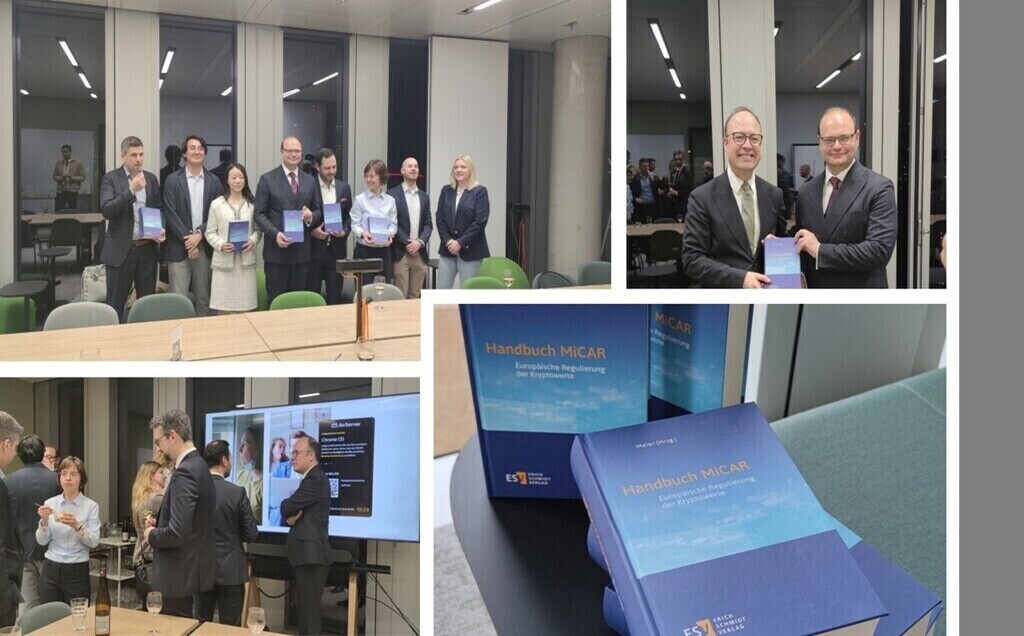 Successful Book Launch at FIN LAW for the New MiCAR Handbook by Dr. Johannes Meier
Presentation of the new MiCAR handbook by Dr. Johannes Meier at the book launch event of FIN LAW.
Successful Book Launch at FIN LAW for the New MiCAR Handbook by Dr. Johannes Meier
Presentation of the new MiCAR handbook by Dr. Johannes Meier at the book launch event of FIN LAW.