
On Friday, 20 November 2026, the amendments under the Implementation Act for the new Consumer Credit Directive (CCD2) took effect. As a result, new regulations in consumer contract law now apply in Germany. However, the new rules do not affect only providers of credit and financing solutions, such as BNPL (Buy Now Pay Later) providers. In this context, the new rules establish a stricter legal framework even for interest-free and short-term financing models, which were previously excluded from the scope of consumer credit law. European regulators have identified an increased risk of debt traps in this market segment for consumers, who—when taking out a large number of microloans—can quickly lose track of their financial situation and consequently fall into situations of excessive debt. However, financing options such as purchase on account, interest-free installment plans, or other payment deferrals can also be provided directly by merchants themselves rather than by professional lenders. In such scenarios, retailers themselves may be classified as lenders under the new consumer credit law. Since 20 November 2026, this may also entail regulatory obligations for them, as lenders are required under the new Sales Financing Act (AbsFinAG) to register their lending activities with Bafin. If merchants merely act as intermediaries for external financing, they may be subject to the licensing requirement under the new Section 34k of the Trade Regulation Act (GewO). Merchants should therefore urgently have their sales financing offers reviewed in light of the new consumer credit law and, if necessary, arrange for Bafin registration or apply for a license as a credit intermediary under Section 34k GewO.
When Exactly Must Merchants Register with Bafin?
The new registration requirement is set forth in § 4 of the AbsFinAG and applies to lenders. The legal definition of a “lender” can generally be found in § 1(1) of the AbsFinAG. According to this provision, lenders within the meaning of the AbsFinAG are persons who, on a commercial basis or to an extent that requires a business operation organized on a commercial basis, grant or promise to grant general consumer loan agreements within the meaning of Section 491(2) of the German Civil Code (BGB) or corresponding forms of financial assistance within the meaning of Section 506(1), first sentence, and (2) of the BGB. However, § 2(1) of the AbsFinAG must also be taken into account, as it limits the scope of application to the extent that only lenders who are already regulated in another capacity—for example, as a credit institution, payment institution, e-money institution, or securities institution—are subject to the law. Furthermore, lenders who, as suppliers of goods or providers of services, exclusively grant or promise to grant payment deferrals to consumers—in a secondary capacity—for the purchase of the goods and services they offer are exempt from the registration requirement, provided that the deferral of payment is granted or promised to be granted interest-free and subject only to limited costs that the consumer must pay in the event of late payment in accordance with national law. In addition, they must be small business owners. A further exception applies to lenders who are already registered in another EU member state. The registration application must clearly and comprehensibly specify which specific consumer loan agreements or financing arrangements are to be offered. Bafin has the authority to grant or deny registration. In the latter case, the affected merchant will not be permitted to offer its planned sales financing arrangements.
When Must Merchants Obtain a License as a Loan Broker Under Section 34k of the German Trade Regulation Act (GewO)?
By contrast, the requirement to obtain a license under the new § 34k GewO applies to brokers of consumer loans or financial assistance. Loan brokers in this context are individuals and companies that, on a commercial basis and in exchange for compensation—which may consist of a monetary payment or another agreed-upon economic benefit—facilitate the conclusion of consumer loan agreements or financing arrangements, or demonstrate the opportunity to conclude such agreements, or advise third parties on such agreements, or otherwise assist in the conclusion of such an agreement. Merchants who, as part of their checkout process on their website or in a traditional brick-and-mortar store (e.g., car dealers, jewelers), offer financing options from third-party service providers and receive compensation for doing so may thereby meet the criteria for requiring a license. Since, according to the wording of the law, loan brokerage also includes demonstrating opportunities to conclude contracts, it is to be expected that the competent authorities will classify not only the direct act of transmission—which occurs when application documents for a consumer loan or financing assistance, completed by the customer, are forwarded to the provider—but also the deliberate and final encouragement of a customer’s willingness to conclude such consumer loan contracts or financial assistance as constituting the elements of the offense. Depending on the federal state, the license must be applied for at the relevant Chamber of Industry and Commerce or the Trade Licensing Office. Merchants should therefore urgently verify whether they act as intermediaries for offers from third-party lenders in their sales processes.
subscribe to NewsletterAbout the author
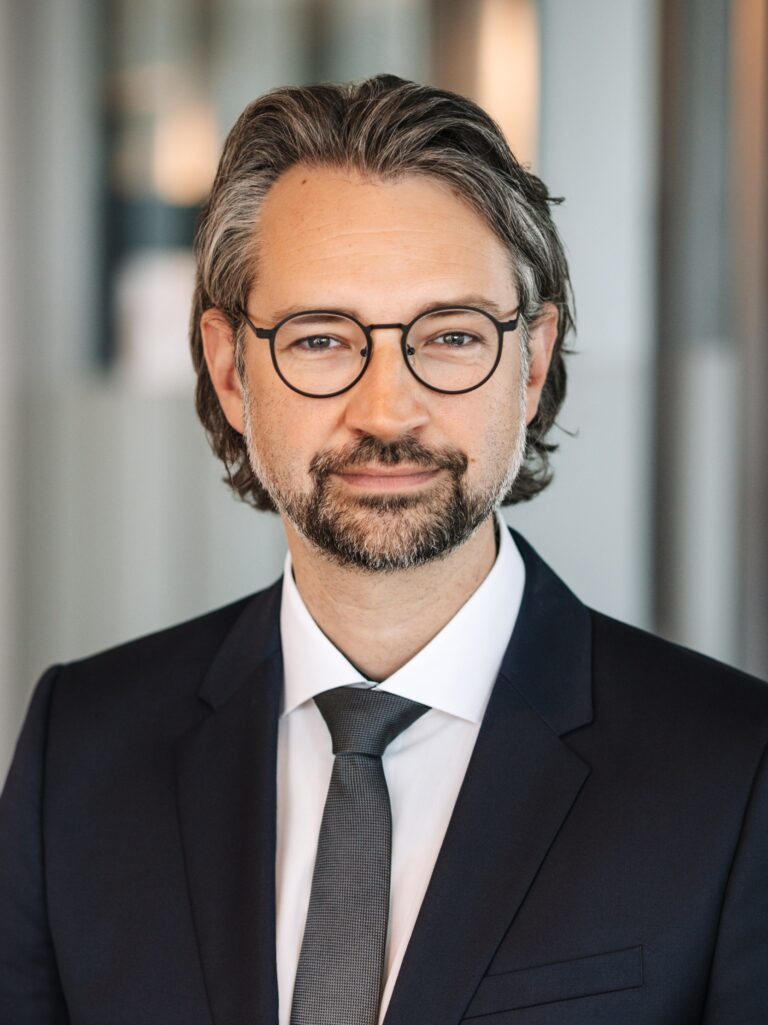
Dr. Lutz Auffenberg, LL.M. (London)
Attorney, Partner at FIN LAW
Specialist Attorney in Banking and Capital Markets Law
For more than 10 years, Dr. Lutz Auffenberg has advised companies, financial service providers and providers of innovative business models on financial supervisory law, payment services supervisory law, capital markets law and the regulatory requirements for digital financial products.
Areas of practice
- Financial supervisory law and BaFin proceedings
- Capital markets, FinTech and crypto regulation
- Payment services supervisory law
-
 FIN LAW – Awarded by WiWo for the Third Time
For the third time, WirtschaftsWoche (WiWO) magazine has awarded FIN LAW and Dr. Lutz Auffenberg, LL.M. (London) as a top Law Firm and Lawyer respectively.
-
 FIN LAW Hosts the Annual Meeting of the Fintech Legal Network
FIN LAW had the pleasure of hosting the Annual Meeting of the Fintech Legal Network and was pleased to welcome members to its offices in Senckenberganlage.
-
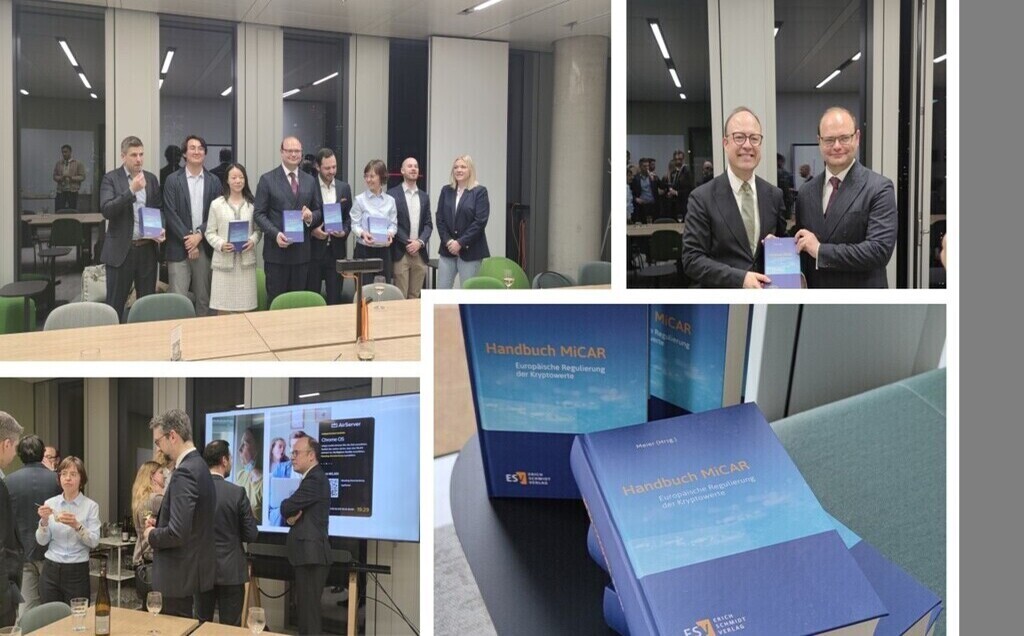 Successful Book Launch at FIN LAW for the New MiCAR Handbook by Dr. Johannes Meier
Presentation of the new MiCAR handbook by Dr. Johannes Meier at the book launch event of FIN LAW.